Proof of Engagement Blockchain vs Proof of Authority


Jack Sterling • December 9, 2025

Proof of Engagement vs. Proof of Authority: Blockchain Consensus Explained Simply


Blockchain consensus mechanisms are the rules that decide how a network agrees on new transactions and blocks. Think of it as a group vote in a decentralized club: Everyone needs to agree the ledger is truthful, or chaos ensues.


Bitcoin pioneered Proof of Work in 2009, but energy concerns—Bitcoin consumes 150 TWh yearly, per Cambridge 2025 estimates, sparked alternatives.


Today, 70 percent of blockchains use non-PoW models, per CoinGecko data. Two emerging contenders: Proof of Engagement (PoE) and Proof of Authority (PoA), each solving different problems in speed, trust, and user involvement.


Proof of Authority (PoA): Trusted Guardians Run the Show

Proof of Authority relies on pre-approved validators—known entities with reputation at stake—rather than anonymous miners. Introduced in 2017 by Ethereum co-founder Gavin Wood for Parity, PoA networks select 10-100 validators based on identity and track record.


 Validators stake their reputation: Misbehave, and the network blacklists them publicly.

In simple terms: Imagine a private club where only vetted members (banks, corporations) can approve entries at the door. No energy-wasting puzzles—just trusted sign-offs. VeChain, a PoA leader with $2.5 billion market cap in 2025, uses 101 Authority Masternodes run by enterprises like PwC and DNV, processing 10,000+ transactions per second (TPS) at sub-cent costs.


Energy footprint: Near zero compared to Proof of Work's 0.5 percent global electricity use.

Proof of Authority (PoA) Proof of Engagement (PoE)
Core Idea Trusted, pre-approved validators sign blocks Real users earn influence through verifiable tasks
Energy Use Near zero (≈ 50 MWh/year for VeChain) 99.9 % less than PoW (runs on top of L2s)
TPS (transactions/sec) 2,000 – 10,000+ (VeChain, BNB Chain) 500 – 2,000+ (Human Protocol, Galxe campaigns)
Finality Time 1–3 seconds 5–30 seconds (depends on base layer)
Security Model Reputation + legal identity (KYC’d validators) Low-medium (thousands to millions of active users)
Top Examples VeChain, BNB Chain, xDAI, POA Network Blackbook.id, Human Protocol, Galxe, Story Protocol

How Proof of Authority Works Step by Step


Validators rotate block production in rounds, signing blocks with cryptographic keys tied to real-world identities. A supermajority (typically 51-67 percent) must approve each block. Faulty validators lose staking bonds or face legal repercussions—PoA often ties to KYC compliance.


Real-world speed: POA networks like Binance Smart Chain (rebranded BNB Chain) hit 3-second finality and 2,000 TPS in 2025, per Blockchair data. Security relies on reputation over computation: Attacks require compromising multiple trusted entities, making it resistant to 51 percent takeovers that plague PoW/PoS. Drawback? Centralization concerns—critics call it "federated blockchain" since validators are chosen, not elected.


Proof of Engagement (PoE): Reward Users for Real Activity


Proof of Engagement flips the model: Instead of trusting institutions, it rewards actual human participation. Emerging in 2023-2024 via platforms like Human Protocol and Galxe, PoE measures meaningful interactions—completing tasks, creating content, or verifying data—to earn staking power or rewards.


Networks track on-chain metrics: Content creation, data validation, or community governance votes. High-engagement users gain "proof scores" that weight their staking or validation power. Galxe's 2025 campaigns saw 12 million unique participants across 500+ Web3 projects, rewarding 45 percent higher yields for active users versus passive holders.


Speed and Scalability: TPS Numbers Tell the Story


PoA dominates raw throughput: xDAI Chain (PoA) sustains 5,000 TPS with 1-second finality; BNB Chain peaks at 3,000 TPS under load. PoE varies by implementation—Human Protocol processes 1,000 labeling tasks/second via off-chain workers settling on-chain, while Galxe handles 500,000 daily credential verifications across L2s.


PoE resists sybils through cost-of-engagement: Fake activity requires real work or fees. Human Protocol's reputation system slashed fraudulent labeling by 95 percent in 2025 audits. However, engagement farming (bots completing mindless tasks) remains a risk, addressed via CAPTCHA-like proofs or ZK verification.


Proof of Authority powers enterprise blockchains: VeChain ($2.5B cap) tracks Walmart China's food supply; POA Network secures Ethereum sidechains. Over 40 enterprise consortia use PoA variants.


Proof of Authority delivers enterprise-grade speed and predictability—perfect for supply chains needing 10,000 TPS with known validators. Proof of Engagement democratizes influence, rewarding real users over whales—ideal for DAOs, AI data markets, and community platforms.


Data as of November 17, 2025—track live metrics via DefiLlama and Chainalysis reports

  • Q: Which one is more decentralized?

    A: PoE is generally more decentralized because anyone can earn influence by doing real work. PoA relies on a small, pre-selected group of validators, so it’s faster but less “permissionless.”

  • Q: Can a regular person run a validator?

    A: PoA → No (you need approval from the network/governance).

    PoE → Yes – just start completing tasks and build reputation.

  • Q: Which is used by big companies?

    A: PoA is the enterprise favorite (PwC, DNV, Walmart China on VeChain).

    PoE is popular with Web3 communities and AI/data projects (OpenAI partners with Human Protocol for labeling).
By Jack Sterling December 9, 2025
Meta's Ai GPU Needs Meta Platforms, formerly known as Facebook, has been constantly pushing the boundaries of technology to enhance user experiences across its suite of applications, including Facebook, Instagram, WhatsApp, and Oculus. A critical aspect of this innovation is the deployment of artificial intelligence, which drives everything from content moderation to personalized user experiences. AI's role within Meta has grown exponentially, as it powers complex algorithms that handle massive amounts of data to make real-time decisions. With billions of users interacting daily, the demand for efficient, high-performance AI infrastructure is paramount. To meet these needs, Meta has traditionally relied on NVIDIA's GPUs, known for their robust performance in handling AI workloads. However, the rapid advancements in AI have necessitated even more specialized hardware solutions. These solutions must offer swift processing capabilities, scalability, and energy efficiency to support Meta's expansive AI operations across its platforms.  As AI models become more sophisticated, requiring extensive computation for deep learning and natural language processing, the need for cutting-edge infrastructure grows. This is where custom compute chips come into play. In this quest for superior AI infrastructure, Meta has been exploring alternative options that promise to deliver enhanced performance tailored to their unique AI requirements. A potential shift towards custom chips from Google's parent company, offering Tensor Processing Units (TPUs), represents a strategic consideration for future-proofing their AI capabilities. Current Meta Partnership With Nvidia Meta Platforms has maintained a crucial partnership with Nvidia, a leading figure in the field of graphics processing and AI computing. This collaboration primarily centers around Nvidia's powerful GPUs, which have become the backbone for running sophisticated AI models and supporting Meta’s expansive infrastructure needs. These GPUs have been instrumental in training large-scale machine learning algorithms, enhancing Meta's capabilities in areas such as content recommendation, computer vision, and natural language processing. The reliance on Nvidia has enabled Meta to rapidly advance its AI initiatives, thereby improving user experiences across its platforms, including Facebook, Instagram, and WhatsApp. Nvidia's cutting-edge technology has provided Meta with the necessary computational power to manage and process massive amounts of data efficiently. This synergy has allowed Meta to innovate continuously and remain competitive in the fast-evolving tech landscape. The GPUs offer flexibility and scalability, crucial for a company that deals with billions of user interactions daily. Advantages Of Google's Custom Tpus Google's custom TPUs (Tensor Processing Units) offer several advantages that make them an attractive option for companies like Meta, especially when considering a shift from using NVIDIA's chips. One of the primary benefits of Google's TPUs is their optimization for artificial intelligence workloads, particularly in deep learning. These chips are designed specifically to handle the heavy computational tasks required for training AI models, resulting in faster processing times and increased efficiency compared to general-purpose GPUs. Another advantage is the scalability that TPUs provide. Google's infrastructure allows organizations to scale their AI workloads seamlessly, making it easier to manage the growing demands of AI development and deployment. This scalability is essential for tech giants like Meta, which continuously expand their AI-driven services. Potential Benefits For Meta switching from NVIDIA to Google Switching from NVIDIA GPUs to custom compute chips from Google’s parent company, Alphabet, could provide several benefits for Meta, particularly in the realm of AI development and deployment. One of the primary advantages is cost efficiency. Utilizing custom tensor processing units (TPUs) could significantly reduce the expenses associated with large-scale AI operations. These chips are specifically optimized for AI tasks, offering better performance-per-dollar compared to generalized GPUs. This means Meta could achieve more with less financial outlay, potentially freeing up resources for other innovative projects. Beyond cost, the integration of Alphabet's TPUs could enhance processing speed and efficiency. These chips are designed to handle the specific computations needed for AI models more effectively, which could lead to faster training times and improved performance of AI-driven features. This capability is crucial as Meta continues to invest heavily in virtual reality, augmented reality, and other AI-powered technologies. Additionally, partnering with Alphabet might facilitate better integration and collaboration opportunities. Given the expertise and infrastructure that Google has developed around its TPUs, Meta could leverage this to speed up the development and deployment of new AI applications. This strategic shift could ultimately strengthen Meta's competitive edge in the tech industry, enabling it to innovate more rapidly and effectively. Challenges And Considerations Switching from NVIDIA to Google’s custom Tensor Processing Units (TPUs) presents several challenges and considerations for Meta Platforms. One significant challenge is the compatibility and integration of TPUs with Meta's existing infrastructure. Transitioning to a new hardware architecture requires extensive modifications to software, potentially disrupting ongoing projects and necessitating considerable developer resources. Additionally, TPUs might require different frameworks or APIs, demanding retraining of staff and adaptation of current AI models to maximize efficiency. Though Google’s TPUs might offer cost advantages, the initial investment in new hardware, training, and possible downtime during transition can be substantial. Meta must conduct thorough cost-benefit analyses to ensure the financial viability of such a switch. Another consideration is vendor dependency. Relying on Google for critical hardware components might limit Meta’s flexibility and bargaining power, particularly if their relationship with Google changes over time.
By Conan Doyle December 9, 2025
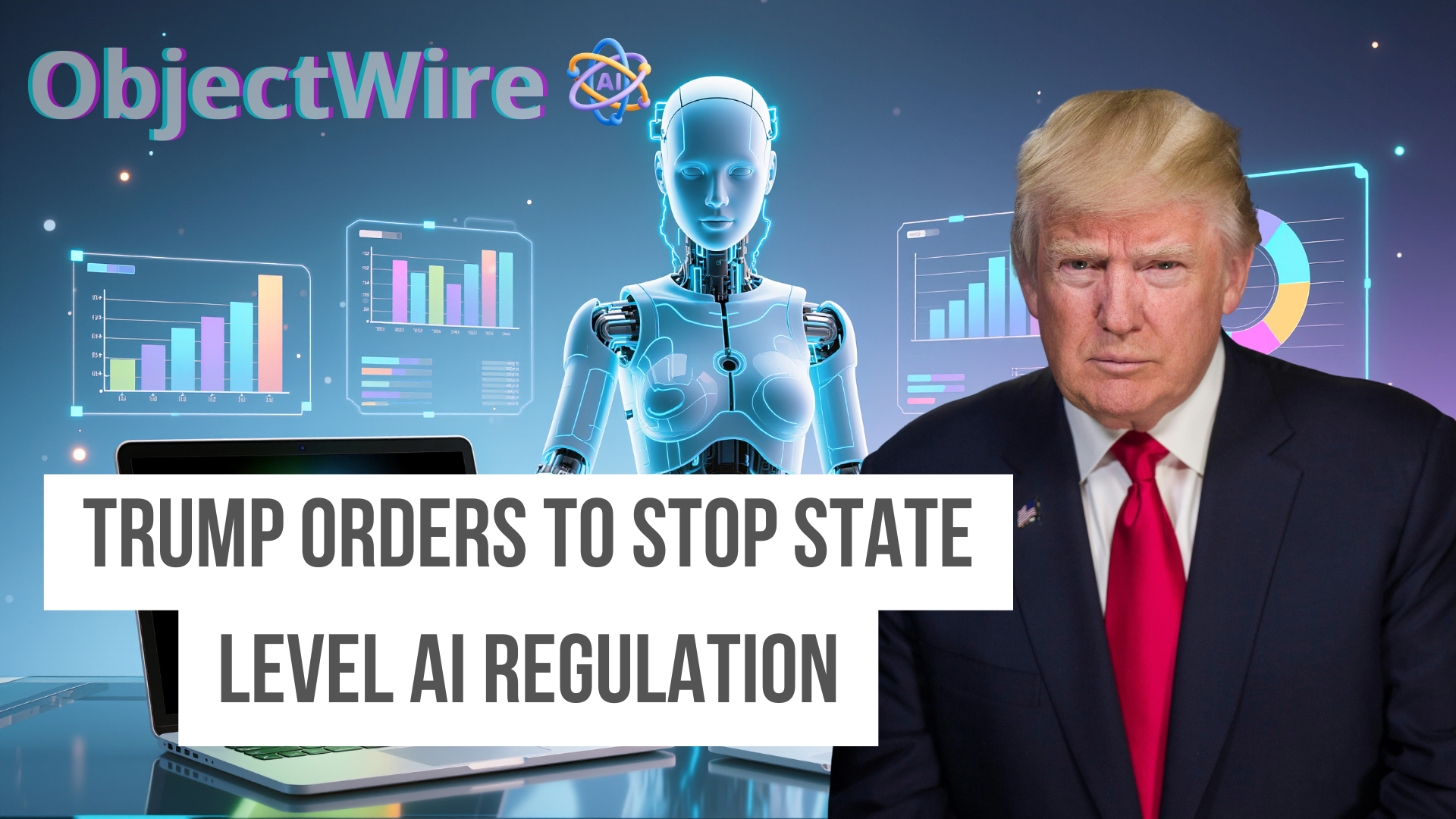
Federal Push to Halt State AI Regulations As artificial intelligence reshapes industries from healthcare to hiring, states have accelerated regulatory efforts in recent months, introducing bills that mandate transparency, risk assessments, and consumer protections. A draft federal executive order, leaked on November 19, 2025, signals a direct challenge to these initiatives, directing agencies to identify and litigate against state laws deemed burdensome. This move, paused as of November 21 , reflects ongoing tensions in a landscape where 45 states considered AI-related legislation in 2025, per the National Conference of State Legislatures (NCSL) tracker. With federal guidance fragmented, lacking comprehensive national rules—states fill the void, but the proposed order could preempt them through lawsuits and funding threats, reshaping compliance for the $200 billion U.S. AI market projected for 2026. States Leading the Charge: Recent Bills and Their Aims In October and November 2025, state lawmakers advanced measures targeting AI's societal risks, focusing on bias mitigation, deepfake disclosures, and algorithmic accountability. California's Senate Bill 53, progressing through committee on October 15, requires high-risk AI systems in employment and lending to undergo annual audits for discrimination, with fines up to $10,000 per violation. New York's RAISE Act, reintroduced October 22, compels developers of generative AI models to publish safety protocols and report incidents causing harm, aiming to curb misuse in elections and media. Illinois's House Bill 5461, cleared October 28, mandates watermarking for AI-generated content to combat deepfakes, building on its 2023 biometric privacy law that has yielded $1.2 billion in settlements since 2015. These bills emphasize developer responsibility: Audits must document bias testing, with public reports due annually, potentially affecting 60 percent of U.S. AI deployments in regulated sectors like finance and healthcare. New York's RAISE Act: Disclosure Mandates Under Fire New York's RAISE Act exemplifies state-level scrutiny, requiring large AI firms to disclose training data sources and risk mitigation steps for models over 1 billion parameters. Introduced October 22, 2025, it faced immediate pushback, with a super PAC linked to tech interests spending $500,000 on ads by November 10 opposing its "innovation-killing" clauses. Proponents cite a 2025 Brookings Institution study showing undisclosed AI biases cost U.S. businesses $100 billion yearly in errors, from hiring disparities to faulty loan approvals. The bill's mechanism: Mandatory incident reporting within 72 hours for harms exceeding $50,000, with AG enforcement powers including civil penalties up to $5,000 per violation. As of November 24, it awaits assembly review, amid 15 similar disclosure bills in other states. Broader State Efforts: Moratoriums, Audits, and Deepfake Bans Beyond disclosures, states target specific harms. Colorado's AI Act, effective February 2026 but under federal scrutiny since October 30, requires impact assessments for high-risk AI in 15 sectors, with 2025 pilot audits uncovering 28 percent bias rates in public tools. Texas's Senate Bill 20, advanced November 5, bans deepfakes in elections 30 days prior to voting, with $1,000 fines per offense, addressing a 2025 rise in 200+ AI-generated attack ads nationwide. A November 17 House defense bill provision proposed a 10-year moratorium on state AI enforcement, but the Senate struck it on November 20 with near-unanimous support (98-2 vote), preserving state authority. Overall, 9.5 percent of 2025 AI bills passed, per Future of Privacy Forum data, focusing on audits (40 percent) and disclosures (35 percent). Federal Leverage AI laws' constitutionality, prioritizing those "burdening interstate commerce." This means developers face dual compliance: State audits now, potential federal overrides later. A 2025 IAPP survey shows 62 percent of firms already budgeting 15 percent more for multi-jurisdictional reviews. States' focus on audits and disclosures could slow AI deployment by 20 percent in regulated sectors, per McKinsey 2025 estimates, but also foster trust—65 percent of consumers favor such transparency, per Pew November polls. The federal pause buys time, but 40 states eyeing 2026 sessions signal escalation; Colorado's law alone prompted 25 compliance filings in Q4 2025.
By Max December 2, 2025
YouTube TV plans lower-cost sports bundles and ESPN Unlimited integration by end-2026, per Disney deal. Base plan at $83/month gains full ESPN access (no extra fee), amid 8M+ subscribers and 15% price hikes since 2020. Explore timelines, features, and market shifts.
Elon Musk wants to Shade the Sun With AI Satellites
By Bryce S November 29, 2025
concept: Solar Shading: Exploring Geoengineering's Reflective Strategies Defining Solar Shading in Climate Context Solar shading, a subset of solar geoengineering, seeks to reflect sunlight back into space to cool global temperatures. Techniques range from stratospheric aerosol injection—mimicking volcanic cooling effects that reduced global temperatures by 0.5 degrees for 1-2 years after Mount Pinatubo's 1991 eruption—to space-based reflectors. Elon Musk's Recent Proposals| AI-Driven Satellites For solar Shading In November 2025, discussions around AI-equipped satellites for sunlight management gained traction, with proposals for constellations of solar-powered units capable of dynamic shading. A fleet of 100 gigawatts worth of such satellites could theoretically adjust Earth's energy balance, as outlined in concepts shared on social platforms that month. These systems would use AI for real-time orientation, potentially reducing incoming solar radiation by 1-2 percent—enough to stabilize temperatures, per Carnegie Endowment analyses from July 2025. SpaceX's Starlink network, with over 6,000 satellites deployed by mid-2025, provides a blueprint for scalability, though adapting for reflectivity would require new materials engineering. The Science of Sun-Shading: From Volcanoes to Orbits Solar geoengineering draws from natural precedents, like volcanic eruptions releasing sulfur dioxide that reflects 10-20 percent more sunlight temporarily. Satellite-based methods position reflectors at Lagrange points for stable shading, potentially cooling the planet by 1 degree and saving 400,000 lives annually from heat-related causes, as modeled in a Georgia Tech study from December 2024. Identifying Risks of Sun Shading Critics point to uncertainties: Altering radiation could shift rainfall by 5-10 percent, impacting agriculture in regions like sub-Saharan Africa, per a 2025 Phys.org article. Geopolitical risks loom, with potential for conflicts over deployment, as warned in a CEPA analysis from November 2025 .
By Jack Sterling November 26, 2025
Stev Kicked Off Logan Paul's Podcast: Making An Official Return To YouTube A Dramatic Exit and a Long-Awaited Comeback In the fast-paced world of online influencers, where one viral clip can eclipse a thousand scripted ones, Stephen Deleonardis—SteveWillDoIt—recently turned heads with a podcast walkout that felt straight out of a reality TV script. On November 25, 2025, during episode 483 of Logan Paul's Impaulsive podcast, the NELK Boys co-founder abruptly exited less than 40 minutes in, citing frustrations that escalated into a heated confrontation. This incident, which garnered over 2 million views on YouTube within 24 hours and sparked more than 50,000 tiktok posts under related hashtags, unfolded just as Steve hyped his YouTube return after a three-year ban. So how much much money did SteveWillDoIt Really give away compared to mr beast As of November 2025, SteveWillDoIt has given away approximately $2.1–2.5 million across his entire career (2018–present), according to cross-referenced estimates from NetWorthSpot, SocialBlade video audits, and his own on-stream tallies. The bulk includes roughly $1.2 million in cash and luxury items from 2019–2021 (Lamborghinis, Rolexes, six-figure fan drops), another $600,000 during his 2022–2025 Kick era (weekly viewer giveaways averaging $50K–$100K per major stream), and a recent $20,000 Compton cash drop plus the upcoming $1 million subscriber-milestone pledge that could push him past $3 million by early 2026. His net worth sits around $5–6 million, meaning giveaways represent roughly 35–40 % of everything he’s ever earned. MrBeast, by contrast, has distributed $92.5 million+ in direct cash and goods since 2018, per GiveawayListing’s exhaustive audit and Beast Philanthropy’s public filings. That figure excludes indirect impact like the 42 million meals (valued at ~$300 million) or the $65 million+ raised through Team Trees/Team Seas. In 2025 alone he’s already cleared $45 million between the $5 million Beast Games prize pool, a $40 million water-well campaign, and a single 15-hour charity stream that netted $12 million. From Fan Backlash to Influencer Firestorms Steve Will Do It and Logan Paul represent two sides of the YouTube coin: one a stunt-driven provocateur, the other a polished entertainer turned WWE star. Steve, born in 1999, rose through NELK Boys pranks and giveaways, peaking with videos like his 2021 "Destroying $100,000 of Weed" that racked up 15 million views. Logan, with 23.6 million subscribers as of November 2025, built his empire from Vine skits to boxing bouts, including a 2018 controversy over a Tokyo forest video that cost him 500,000 subscribers overnight but later rebounded with 2.5 million gained in 2024 alone. Their intersections date back to 2019 collaborations, such as joint streams drawing 1.8 million concurrent viewers on Twitch proxies, blending Steve's chaos with Logan's charisma. Data from HypeAuditor shows their combined audience reaches 28 million unique users, with 42% overlap in 18-24-year-old demographics. Yet, tensions simmered: Steve's 2022 YouTube ban stemmed from "severe violations" tied to gambling ads, a policy enforced on 1,200 channels that year, per YouTube's transparency report. Logan, meanwhile, navigated his own bans, returning stronger—his Impaulsive podcast alone logs 150 million monthly downloads across platforms. This backdrop of mutual reinvention set the stage for their latest clash, where old alliances met fresh ambitions. A Podcast Meltdown Over MrBeast and Boundaries What started as a promotional chat for Steve's December 24, 2025, YouTube relaunch devolved into a 44-minute episode that Impaulsive hosts Logan Paul and Mike Majlak later described as "unnecessarily chaotic." At the 30-minute mark, Steve accused MrBeast ( Jimmy Donaldson ) of being "fake" and "ghosting" him during his ban, claiming the philanthropist, whose channel boasts 320 million subscribers and $854 million in 2024 earnings, offered no help despite prior outreach. Logan defended MrBeast, noting Steve's ban resulted from self-promoted gambling links, a violation affecting 15% of flagged creator content in 2022 per YouTube stats. Tensions peaked when Steve used a racial slur three times—bleeped in the edit—and interrupted repeatedly, prompting Logan to say, "You've reached a line... chill a little bit," before escorting him out. Post-exit, Logan remarked, "If we weren’t on this podcast, I would’ve slapped him," a clip viewed 3.2 million times on X. Majlak later revealed editing out 20 minutes where Steve "drank heavily," protecting the guest amid what he called "nonsensical" rants. Steve Will Do It's Surprise Return to YouTube Banned since August 1, 2022, for "severe violations" involving gambling promotions, a policy that zapped 2,300 channels that year, Steve's reinstatement by January 1, 2026, with the "Convict Kitchen" series.
NestJS the react framework for the web
By Max November 23, 2025
NestJS vs Next.js vs Express: In-Depth 2025 Node.js Framework Comparison Hey, so you are probly working on a dev project! How exciting, this guide takes you through these 3 technologies, where and when to use them, and even how they work together. Deep technical profiles and head-to-head comparisons of NestJS an enterprise TypeScript backend, Next.js, a React full-stack powerhouse, and Expres,s a minimalist API foundation. Lets get started. What is NestJS Angular-Inspired Architecture for Enterprise Node.js ?? As of 2025, NestJS (version 10+) has become a go-to choice for teams that want structure and scalability in Node.js. It builds on top of Express or Fastify, but adds a clear, Angular-style architecture that keeps big projects organized. At the center of NestJS is its modular design. Apps are split into feature modules, which can load lazily to improve performance as your system grows. Dependency injection—similar to what you see in Angular or Spring—helps keep code loosely coupled and highly testable, which enterprise teams love. Much of Nest’s power comes from decorators like @Controller , @Injectable , and @Guard . These provide metadata the framework uses to cleanly handle cross-cutting concerns. Nest also supports many communication layers out of the box: HTTP, GraphQL, WebSockets, gRPC, MQTT, and more. Its built-in microservice system includes transport options such as TCP, Redis, NATS, and Kafka, making it easy to move from a monolith to microservices. Nest’s CLI speeds up development by generating consistent boilerplate. Next.js: Vercel’s Performance-Focused React Framework Next.js shines through its flexible rendering options. You can use SSR, SSG, ISR, streaming with Suspense, or the newer Partial Prerendering technique. Middleware, API routes, and route handlers can run on edge or serverless runtimes, making it easy to distribute logic globally on Vercel or in your own Node environment. Turbopack—the Rust-based replacement for Webpack —is now stable and dramatically faster, making dev servers and builds much quicker. Built-in image, font, and script optimizations reduce payload sizes automatically. Next.js 15, stabilized in late 2025, has firmly established itself as the leading React meta-framework—especially for teams that care about speed. Its App Router system creates routes directly from your file structure and relies heavily on React Server Components, Server Actions, and parallel routing to simplify complex layouts. Express JS | The Minimalist Classic That Still Delivers Express 5 finally arrived in early 2025, and it continues to be the lightweight backbone of the Node ecosystem. Express doesn’t force any particular file structure or architectural pattern, which gives developers total freedom. Routing is straightforward but powerful, with support for parameters, method-based handlers, and nested routers. Thousands of middleware packages cover tasks like authentication, logging, CORS, and compression. Even after more than a decade, Express continues to power critical systems at major companies and remains the foundation beneath frameworks like NestJS.
By Jack Sterling November 23, 2025
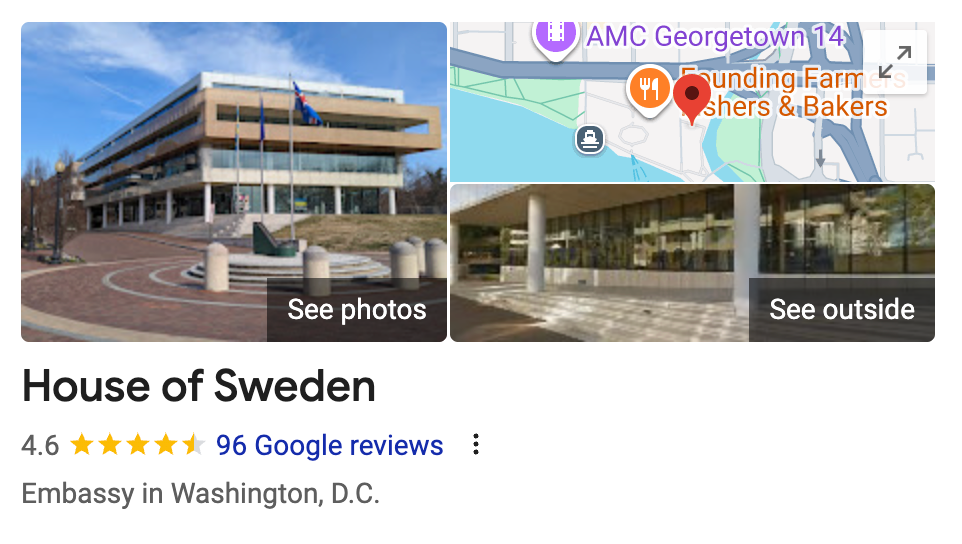
The House of Sweden: An Exclusive "Multi-Use" Building A Diplomatic Hub: It is the official home of the Embassy of Sweden and the Embassy of Iceland . A Cultural Center: It hosts public events and art exhibitions to promote Swedish culture. A Private Business Center: This is the key. The building also contains 19 exclusive "corporate office suites" that the Swedish government leases to private companies. Perched on the Georgetown waterfront at 2900 K Street NW, the House of Sweden overlooks the Potomac River and Rock Creek, blending seamlessly into Washington, D.C.'s historic fabric. This five-story, 7,500 square meter structure houses the Swedish Embassy, Iceland's diplomatic mission, and the Faroe Islands representation, creating a collaborative Nordic outpost in the U.S. capital. Opened amid the city's 19 million annual tourists, it stands as a modern counterpoint to Georgetown's colonial charm, drawing 50,000 visitors yearly for events and exhibits, per Sweden Abroad 2025 attendance logs. history of the House of Sweden DC The push for a dedicated Swedish embassy began in the 1980s, but the Georgetown site solidified as viable in 1997 after navigating U.S. federal land approvals. By 2002, Sweden's National Property Board launched an international competition, receiving 67 entries focused on embodying "Swedish openness" through sustainable design. Architects Gert Wingårdh and Tomas Hansen of Wingårdh Arkitektkontor won with a glass-heavy proposal, edging out 66 rivals via a jury praising its "refined experiences." Groundbreaking occurred April 23, 2004, with Sweden's Culture Minister Marita Ulvskog and D.C. Mayor Anthony Williams wielding the ceremonial shovel. Construction was wrapped up by summer 2006 at a $67 million cost. Inauguration on October 23, 2006, drew King Carl XVI Gustaf and Queen Silvia, marking Sweden's first purpose-built U.S. embassy in 50 years and hosting 1,200 dignitaries. Wingårdh's Kasper Salin Prize win in 2007—Sweden's top architecture honor—followed, affirming its status among 1,000+ global embassy designs. What is the purpose of the Multi-National House of Sweden Managed by Sweden's National Property Board (SFV) since 2006, the House hosts three missions. The Swedish Embassy occupies prime floors for 50 diplomats, handling $10 billion in bilateral trade—up 15 percent from 2020—across tech, clean energy, and pharma sectors. Iceland's mission, relocated here in 2006, covers 1,000 square meters for its five staff, supporting $500 million in U.S.-Iceland exports like aluminum and fish. The Faroe Islands Representation, added in 2010, uses 500 square meters for economic promotion, boosting $200 million in seafood trade amid 20 percent U.S. market growth since 2020. This shared model cuts costs by 40 percent versus standalone embassies, per SFV efficiency reports. Office space for diplomatic deals? Beyond diplomacy, the House functions as a 12,000 square foot event venue, hosting 150+ gatherings yearly—from corporate summits to cultural fests—generating $2 million in 2024 rentals, per Washington.org data. Eight configurable rooms, including a 4,000 square foot event center with Potomac views, accommodate 500 guests, featuring indoor/outdoor pools and a rooftop terrace overlooking the Kennedy Center and Air Force Memorial.  The House facilitates $10 billion in Sweden-U.S. trade (all above board of course), with events like business forums generating 500+ networking leads yearly. Since 2006, the House has hosted 1,200+ events, from royal inaugurations to Indigenous art debuts, and even to the likes of hunter biden . Rosemont Seneca's Business and Model First, to understand why they would be in that building, it helps to understand what the firm did. "Investment" and "private equity" are broad terms, but Rosemont Seneca's focus was specific: International Advisory: The firm specialized in "international business development" and "advisory services." In simple terms, they acted as high-level consultants and deal-makers. Connecting Capital: Their business involved connecting U.S.-based investors and companies with opportunities in foreign markets, and vice-versa. Global Focus: Their ventures and partnerships were explicitly global, involving entities and partners in various countries. For a firm like this, their business is international relations and access. Their office is not just a place to work; it's a strategic tool. The House of Sweden: An Exclusive "Multi-Use" Building Your research was correct that the building is an embassy. The missing piece is that the House of Sweden is a multi-use property owned by the Swedish government (through its National Property Board, or SFV). It is not only an embassy. It functions as: Other Private Companies that work out of the House of Sweden in DC the "2026" List There are two main reasons a list, especially for 2026, is not publicly available: Security and Privacy: Because the building houses two active embassies, the full tenant list is not made public for security reasons. Unlike a standard commercial office tower, you cannot find a lobby directory online. Commercial Privacy: Tenant leases are private business agreements. This information is almost never made public unless a company announces its location in a press release. A list for 2026 would be speculative, as it would depend on leases that have not yet been signed. Confirmed and Typical Tenants While a full list isn't public, we know the type of tenants the building attracts. The goal is to house companies that "promote Swedish commerce" or have a strong international profile. A perfect example of another private company with offices in the House of Sweden is Volvo . The building has been home to the "DC corporate offices for Volvo," the global car manufacturer. In summary, Rosemont Seneca Advisors was an international investment firm that rented a private corporate suite in the House of Sweden, placing them in a prestigious environment alongside embassies and other global companies like Volvo, which perfectly matched their business model of international deal-making.
By Conan Doyle November 20, 2025
Texas Senate Bill 2420, enacted May 27, 2025, as the App Store Accountability Act (ASAA), requires app store operators and developers to verify user ages and secure parental consent for minors accessing Texas users. Effective January 1, 2026, the law targets platforms collecting data from children under 18, with Texas's 7.5 million minors (21% of 30 million population) in scope per U.S. Legislative text her e . Age Verification Requirements: Mandatory Checks at Account Creation SB 2420 mandates age verification at app store account setup, classifying users as "adult" (18+) or minor categories (under 13, 13-15, 16-17). App stores must block minor accounts from adult-rated apps without consent, using methods like Declared Age Range API (live in iOS 18.1) or third-party ID scans. Apple's Texas rollout affects 12 million iOS device Verifiable Approval for Minors Under 18 SB 2420 For minors, SB 2420 requires linking accounts to a parent's verified profile before downloads or in-app purchases, with consent re-obtained for significant changes like new data types. Verification uses government ID or credit card methods, proven effective in FTC pilot tests. It applies to many Texas children under 13, where most parents support such safeguards per Pew surveys. Developers outside stores, like web-direct, must embed similar flows, impacting a notable share of mobile apps. Users under 18 may see fewer app installs due to gates, per eMarketer forecasts, with some parental opt-outs in beta tests. Privacy: ID uploads raise breach risks, with a portion of U.S. incidents tied to verification per Verizon DBIR. Minors' data faces more scrutiny under expanded COPPA-like rules . SB 2420 Stats: Texas's Digital Gatekeeper in Action SB 2420's January 2026 kickoff—verifying Texas minors, substantial fines—reshapes most app traffic amid multi-state ripple. From unchecked installs to full gates, it's privacy's velvet rope: Elegant, but expect some to slip under.  objectwire.org
By Jack Wang November 20, 2025
Google's privacy woes trace back to a December 2018 Associated Press investigation revealing that the company's Android and iOS apps continued collecting precise location data—even after users disabled Location History. The report, based on interviews with Google privacy experts and code analysis, showed data pings every 2-3 minutes to Google's servers, amassing 10-20 gigabytes per user annually in some cases. This practice affected 2.4 billion Android users globally, per Statista 2019 data, sparking 45 state AG investigations by mid-2020. Texas AG Ken Paxton, citing 1.5 million affected residents, led the charge in a 2022 multistate suit. Full AP exposé here. Core Allegations: Deceptive Data Harvesting Exposed At heart, Texas accused Google of misleading users about data controls. Despite in-app prompts stating "Location History is turned off," apps like Maps and Search sent location signals via "Location Services" or "Web & App Activity," capturing coordinates within 10 meters accuracy. The suit claimed this violated consent norms, with 68% of surveyed users unaware of ongoing tracking, per a 2021 Pew Research Center poll on digital privacy. No criminal intent alleged, but the deception allegedly shortchanged users' autonomy in a market where 92% of Americans own smartphones, per Pew 2024 stats. Complaint details here . Texas DTPA Takes Center Stage Texas invoked the Deceptive Trade Practices-Consumer Protection Act (DTPA), a 1973 statute prohibiting "false, misleading, or deceptive acts" in commerce, with penalties up to $20,000 per violation plus treble damages. The suit argued Google's privacy settings constituted "unconscionable actions," as users couldn't reasonably opt out—similar to a 2019 Illinois BIPA case netting $650 million for biometric overreach. Federally, it skirted the Wiretap Act (18 U.S.C. § 2510) by claiming no "interception," but Texas tied it to state analogs. The Multistate Probe into Google From 2019 to 2022 Lawsuit Post-AP report, 50+ AGs coordinated via the NAAG's Consumer Protection Working Group, issuing a 2019 subpoena for Google's data logs—yielding 500,000 pages reviewed by 2020. Texas, joined by 39 states, filed in June 2022 in Travis County District Court (Case No. D-1-GN-22-003276), alleging 5 years of violations affecting 40 million Texans. Docket summary here . Google Settlement Talks Close: 2024-2025 Negotiations at $1.375B Talks intensified in Q1 2024 after a California federal judge dismissed a parallel suit on standing grounds, pressuring multistate resolution. By Q3 2024, 38 states settled for $391.5 million total—Texas's share $23 million initially—but Paxton pushed for standalone leverage, citing 2.5 million unique claims. Final $1.375 billion accord, announced October 31, 2025, includes $1.2 billion to Texas coffers and $175 million for user restitution via claims portal. Non-monetary: Google commits to 5-year audits and clearer toggles, verified by third-party (e.g., Deloitte). Spike in State AG Tech Suits Post-Settlement The deal caps a trend: State AG privacy actions rose 40% from 2023-2025, per NAAG data, with tech settlements totaling $5.2 billion. Google's stock dipped 1.2% ($2.5 billion market cap hit) on announcement day, per Yahoo Finance. EOD Google's Data Harvesting Empire Cannot be stopped.
By Conan Doyle November 20, 2025
Motive, formerly KeepTruckin, launched in 2013 as a San Francisco-based platform for fleet management, evolving into an AI-driven integration tool for logistics, safety, and operations. The company processes data from 100,000+ connected vehicles daily, enabling real-time insights via dash cams and telematics. In 2024, Motive's AI suite analyzed 1.5 billion miles of driving data, reducing accident rates by 65% for clients per internal benchmarks. With $1.6 billion raised across seven rounds, including a $150 million Series E in 2022 valuing it at $2.9 billion, Motive serves 120,000+ customers globally. Company timeline here . Motive's Strategic Move: Why Austin, Texas? Motive's 2025 Austin expansion targets a city adding 6,000 tech jobs annually, per CompTIA's 2024 report on U.S. tech employment. Austin's 5,000+ startups and $50 billion tech GDP in 2024 make it the No. 2 U.S. city for venture capital outside Silicon Valley, with $3.5 billion invested in 2024 alone. Proximity to the University of Texas, graduating 8,000 STEM students yearly, supplies 15% of Motive's targeted hires. Motive's AI platform integrates telematics with ERP systems for 99.9% uptime, processing 500 million API calls daily across 50+ partners like Samsara and Geotab. In 2024, AI-driven safety scores prevented 40,000 collisions, saving clients $200 million in claims per actuarial reports. Capabilities include predictive maintenance reducing downtime by 30%, based on 10 billion data points analyzed. For fleets, ELD compliance hit 98% accuracy in 2025 audits. Tech stack details here . Motive's International Growth Plans - Start in Texas Motive operates in 50+ countries, with 2024 international revenue at 25% of $500 million total, up from 15% in 2022. Expansion includes EMEA offices adding 300 jobs and APAC integrations serving 20,000 Asian fleets. Austin ranks No. 1 for tech worker migration in 2024, attracting 12,000 relocators per Indeed data, with 40% from California. The city's 500+ VC firms funded 300 deals in Q3 2025 alone, totaling $800 million. SXSW drew 400,000 attendees in 2025, generating 50,000 networking connections. Quality metrics: 92% resident satisfaction with work-life balance, per Gallup 2024 poll. Innovation ecosystem here . The Future of Tech: Motive's AI Fleet Anchor Motive aims for $1 billion ARR by 2027, projecting 50% from AI integrations amid a $100 billion global fleet market growing 12% CAGR per McKinsey. Goals include carbon tracking for 1 million EVs by 2030, reducing emissions by 20% via route optimization. Austin R&D could yield 15 new patents yearly. Vision roadmap here. Motive's Austin bet—50 jobs incoming, $120K salaries—taps a hub adding 6,000 tech roles yearly amid $3.5B VC flows. From 1.5B miles analyzed to 65% crash cuts, the $2.9B platform etches Texas into its 50-country map. Data as of November 2, 2025—updates via gomotive.com .

STAY UP TO DATE

GET Objective LATEST