The Dawn of the Orbital AI Era: SpaceX and xAI Move the Cloud to the Stars
Moving AI training and inference from terrestrial data centers to the vacuum of space to solve the bottlenecks of land, power, and thermal management.
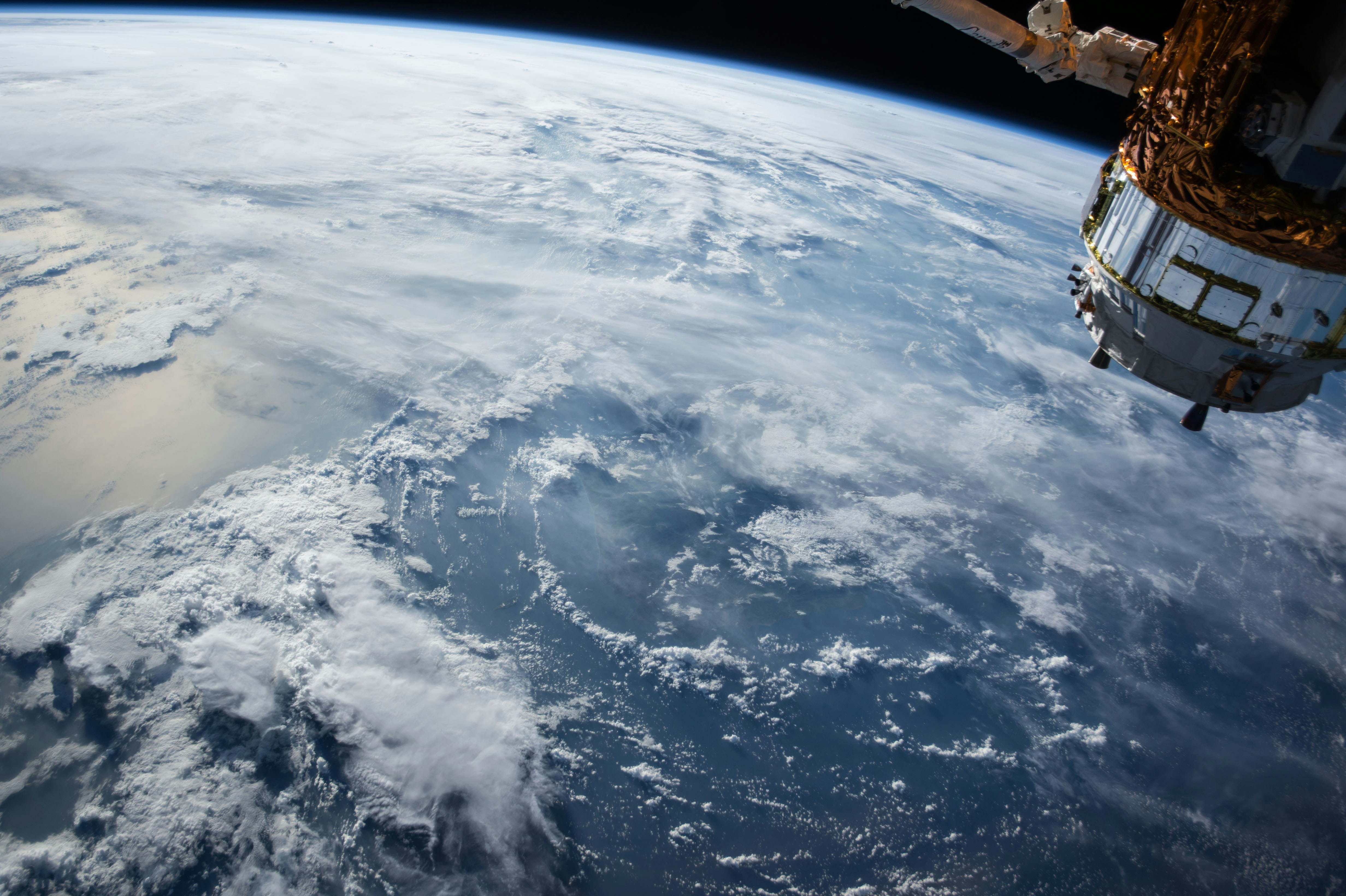
For decades, "The Cloud" has been a terrestrial construct—a nebulous collection of data centers scattered across the Earth's surface. However, on February 2, 2026, the announcement of the merger between SpaceX and xAI signaled a fundamental shift. This $1.25 trillion union establishes the foundation for Orbital Computing, moving AI training and inference from the ground to the stars.
I. Breaking the Terrestrial Bottleneck
Artificial Intelligence training requires immense resources: land for facilities, consistent power for operations, and massive quantities of water for cooling. On Earth, these resources are reaching critical scarcity. Data centers are increasingly straining local power grids and competing for water resources.
📊 The Space Advantage
24/7
Solar Availability
Radiative
Cooling Method
Zero-G
Manufacturing
II. The Strategic Synergy: SpaceX and xAI
The merger creates a closed-loop system that competitors currently cannot replicate. It leverages the logistical capability of Starship, the global connectivity of Starlink, and the intelligence engine of xAI.
The Orbital AI Lifecycle
Launch (Starship)
High-capacity server deployment at costs below $100/kg.
Networking (Starlink)
Inter-satellite laser links for high-bandwidth, low-latency data transit.
Processing (xAI)
On-orbit inference and model training using constant solar power.
Downlink
Refined intelligence transmitted directly to end-users on Earth.
III. Industrial Infrastructure: Supply Chain Sectors
The transition to orbital computing requires specialized hardware capable of surviving the vacuum and radiation of space. This creates new opportunities in specific industrial sectors.
| Sector | Key Focus | Significance |
|---|---|---|
| Semiconductors | Radiation Hardening | Protecting logic from bit-flips caused by cosmic rays. |
| Thermal Management | Radiative Cooling | High-emissivity materials and heat exchangers for heat venting. |
| Communications | Laser Inter-links | High-bandwidth data transfer without radio interference. |
| Robotics | On-Orbit Servicing | Automated maintenance and hardware upgrades in vacuum. |
IV. Risks and Regulatory Oversight
Despite the technological advantages, the path remains complex. The financial pressure on SpaceX's balance sheet is significant, as xAI remains a capital-intensive operation. Furthermore, the consolidation of global launch capability, satellite internet, and advanced AI under a single entity will inevitably invite rigorous regulatory and national security scrutiny from sovereign nations.
Orbital computing is the moment AI stopped being a software story and became a civilizational infrastructure story.
Final Conclusion:
We are witnessing the transition from building isolated data centers on the ground to developing a planetary-scale computer. For technologists and investors, the message is clear: the most strategically significant architecture for the next decade is not located on a map—it is located in the stars.