alphabet or nvidia: here's who i think will win the ai chip war
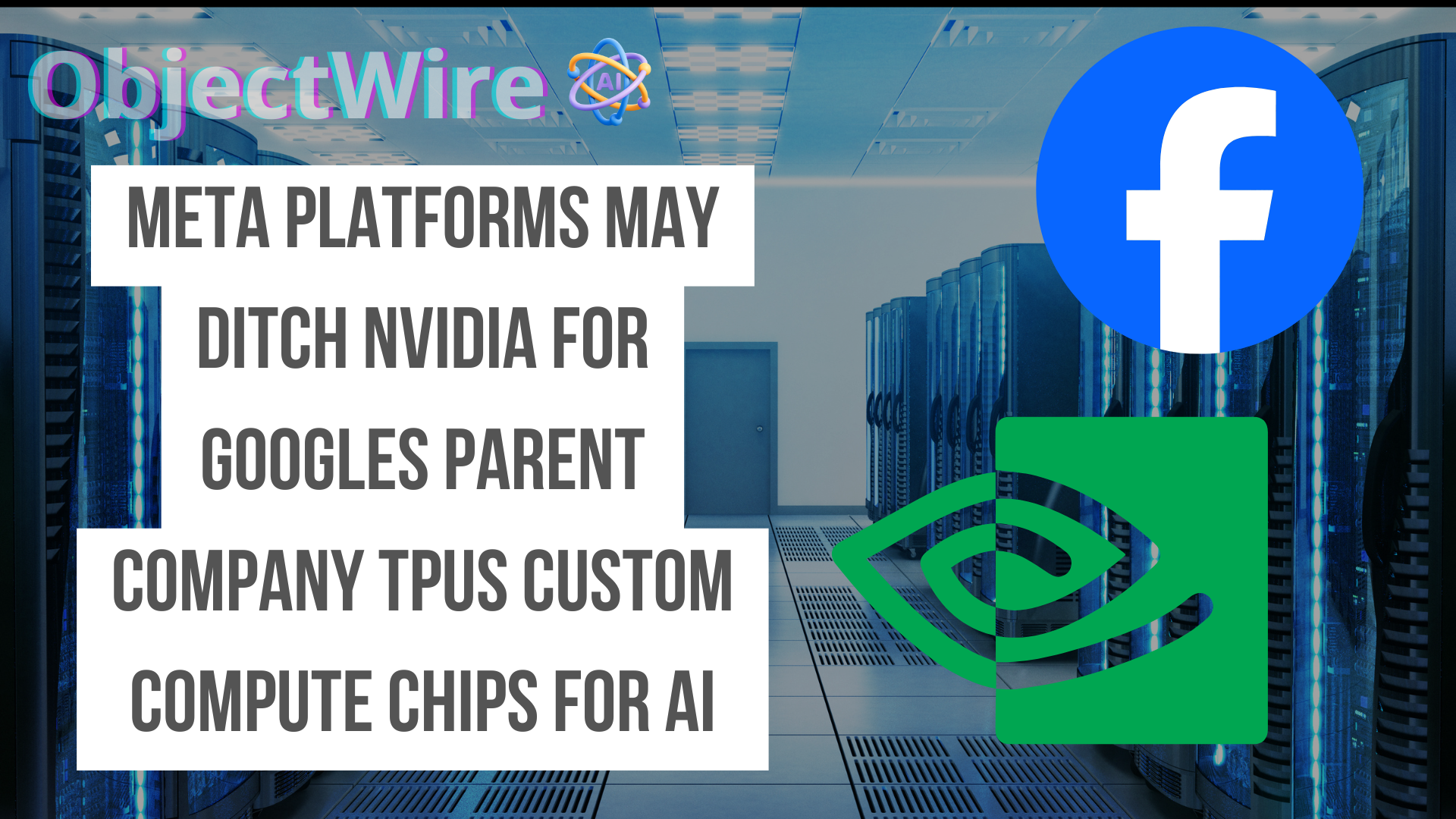
In the accelerating domain of artificial intelligence hardware, Google's Tensor Processing Units (TPUs) and NVIDIA's Graphics Processing Units (GPUs) represent two pivotal architectures vying for dominance, particularly when scrutinized through the lenses of efficiency and throughput.
The Explosive Growth of AI Chips in 2020's
The AI chip market has solidified its role as a foundational pillar of technological progress, fueled by relentless requirements for processing power in machine learning and deep neural architectures.
As of late 2025, the industry's trajectory signals robust expansion into 2026, with specialized accelerators such as Google's Tensor Processing Units (TPUs) and NVIDIA's Graphics Processing Units (GPUs) engaged in intense rivalry. These processors facilitate advancements in autonomous vehicles, medical imaging, and predictive analytics, as evidenced by a global market valued around $90-100 billion in 2025 and projected to approach or exceed $120 billion the following year, reflecting broad integration across sectors.
What are Alphabet TPUs ?
Google Power for Deep Learning Workloads
Google's TPUs embody targeted engineering in AI acceleration, purpose-built for tensor operations central to frameworks like TensorFlow. These ASICs shine in efficient matrix computations essential to neural networks, providing strong performance in both training and inference stages.
Seamless incorporation into Google Cloud renders TPUs a flexible option for organizations managing vast data volumes. The latest iterations, including the seventh-generation Ironwood, prioritize energy efficiency, doubling performance per watt in some metrics, while delivering elevated throughput for large-scale cloud AI deployments.
NVIDIA GPUs | Versatile Engines with Broad Ecosystem Support
NVIDIA's GPUs sustain market prominence via adaptability, accommodating AI alongside rendering, simulation, and general high-performance tasks. Designs like Hopper and the succeeding Blackwell feature dedicated tensor cores tailored for AI acceleration, bolstering massive parallel execution.
The CUDA ecosystem cultivates an expansive developer base, complemented by comprehensive toolkits that expedite AI implementation. This wide-ranging utility secures NVIDIA's foothold in varied domains, spanning academic research to enterprise-scale operations.
Architectural Differences: Specialization vs General-Purpose Design
TPUs prioritize tensor operations, achieving superior efficiency in specific machine learning tasks through custom silicon tailored for Google's frameworks. This specialization reduces latency in cloud scenarios.
GPUs, conversely, handle a wider array of parallel computations, making them adaptable for evolving AI needs beyond pure deep learning. The architectural trade-off favors TPUs for dedicated workloads and GPUs for flexibility across applications.
Industry Applications Google TPU VS NVIDA Comparison
- Healthcare: GPUs accelerate medical imaging and drug discovery simulations; TPUs power large-scale predictive models for personalized medicine.
- Autonomous Vehicles: NVIDIA's platforms dominate real-time processing in self-driving tech, while TPUs support backend training for fleet learning.
- Finance: Both enable fraud detection and algorithmic trading, with GPUs handling high-frequency needs and TPUs managing vast dataset analysis.
NVIDIA holds a commanding share in on-premise and edge AI deployments, benefiting from established partnerships. Alphabet's TPUs gain traction in cloud services, where integration with Google Cloud drives enterprise adoption.
Developer surveys indicate CUDA's widespread use, while TensorFlow's ecosystem supports TPU growth in research and large-scale production.
This edge stems from their streamlined focus on AI-specific workloads, enabling up to 3x throughput gains in training and inference tasks, as evidenced by real-world deployments where TPU v6e variants yield 65% cost savings over NVIDIA equivalents. Conversely, NVIDIA GPUs offer broader versatility across diverse computing paradigms, from graphics rendering to general-purpose parallel processing, though this flexibility can translate to higher power consumption and the need for meticulous optimization to match TPU inference efficiencies straight out of the gate.
Coexistence Over Monopoly Dominance
The AI chip landscape in 2026 features robust competition, with TPUs and GPUs addressing different priorities, specialization versus versatility.
Google is never beating the Monopoly Allegations.
Industries benefit from this duality, selecting hardware based on specific needs rather than a one-size-fits-all solution.
In the broader AI race, TPUs have been lauded for delivering 4x better cost-performance in inference scenarios, potentially undercutting NVIDIA's market stronghold by sidestepping hefty markups and emphasizing cloud-integrated economies. Yet, for many organizations, GPUs retain an advantage in accessibility and ecosystem maturity, where raw throughput in heterogeneous environments often outweighs specialized efficiency, underscoring a nuanced trade-off rather than a outright victor.
Title or Question
Describe the item or answer the question so that site visitors who are interested get more information. You can emphasize this text with bullets, italics or bold, and add links.Title or Question
Describe the item or answer the question so that site visitors who are interested get more information. You can emphasize this text with bullets, italics or bold, and add links.Title or Question
Describe the item or answer the question so that site visitors who are interested get more information. You can emphasize this text with bullets, italics or bold, and add links.