BY THE NUMBERS
$750M
Single gift announced April 21, 2026, largest in UT Austin history
300 acres
UT Dell Campus for Advanced Research footprint in Northwest Austin
2030
Projected opening year for the UT Dell Medical Center
1. Full Circle | From a Dorm Room in 1984 to a $750M Hospital in 2026
In 1984, a 19-year-old named Michael Dell assembled computer upgrades in Room 2713 of Dobie Center on the University of Texas at Austin campus and sold them to fellow students. He dropped out before his sophomore year to found what became one of the world's largest technology companies. Forty-two years later, on April 21, 2026, Michael and Susan Dell announced a $750 million donation to that same university, the largest single gift in UT Austin's history and the one that pushed total Dell family giving to the institution past $1 billion.
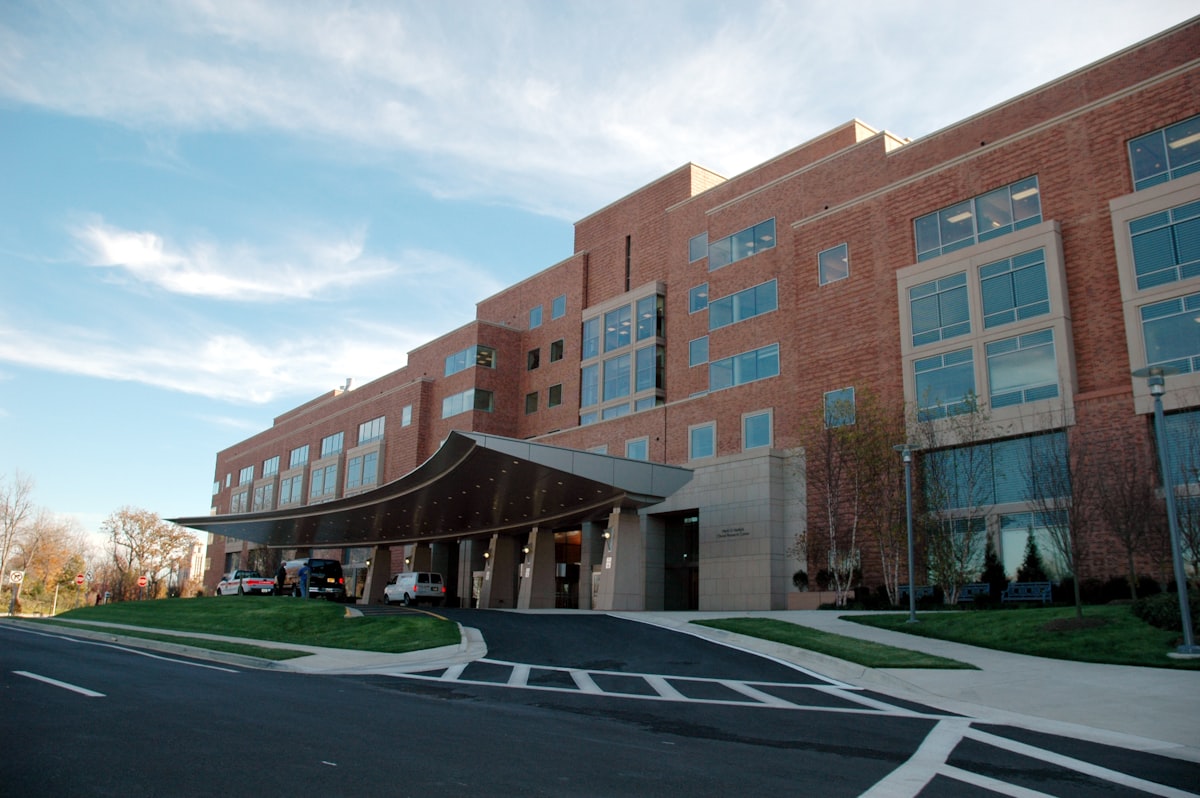
The gift funds the construction of the UT Dell Medical Center, described officially as the first AI-native hospital in the United States, and the UT Dell Campus for Advanced Research, a 300-acre technology and medicine hub in Northwest Austin. Groundbreaking is expected in Fall 2026. The hospital is projected to open in 2030.
Austin is currently the largest city in the United States without a comprehensive academic medical center. That distinction ends with this project.
Industrial Proof:
University leadership and the Dell Foundation have framed this project as a generational bet on Austin's trajectory. The explicit goal is to position UT Austin among the top 10 medical research centers in the world within a decade, supported by a $10 billion, 10-year fundraising campaign that this gift formally launches. The hospital is the anchor, but the ambition is to build an integrated ecosystem of AI research, clinical innovation, and precision medicine that transforms Austin into the leading hub for health technology in the United States.
2. What "AI-Native" Actually Means | Building Intelligence Into the Structure
Most hospitals deploying AI today are retrofitting. They are layering machine learning tools onto electronic health records designed in the 1990s, adding monitoring software to legacy equipment, and asking physicians to interact with AI dashboards that sit beside, rather than inside, their clinical workflows.
The UT Dell Medical Center is being architecturally designed as an AI-first facility from the first structural drawing. The distinction is not cosmetic.
Ambient Intelligence
AI Care Team Members
Human-Robot Training Centers
3. MD Anderson Integration | World-Class Cancer Care, Now in Austin
One of the most consequential components of the gift is the formal integration of MD Anderson Cancer Center, consistently ranked the top cancer hospital in the United States, into the Austin campus.
Currently, Austin-area patients who need access to MD Anderson's clinical trials, experimental therapies, and specialized oncology expertise must travel to Houston, a three-hour drive or a flight away. For patients undergoing active treatment, that burden is not just inconvenient. It is a barrier to care that causes some patients to forgo optimal treatment entirely.
The new campus will house MD Anderson clinical operations, bringing those trials and therapies to Austin patients directly. Beyond access, the integration creates a data partnership that combines MD Anderson's deep oncology expertise with UT Austin's supercomputing infrastructure to accelerate precision medicine, treatments built on a patient's specific genetic profile rather than population-level averages.
Gift Allocation: Key Priorities
- UT Dell Medical Center: AI-native hospital, the anchor of the campus
- MD Anderson Austin: Oncology clinic, clinical trials, precision medicine
- TACC Expansion: National supercomputer powered by Dell AI infrastructure
- Undergraduate scholarships: Earmarked to maintain access across economic backgrounds
- Student housing: New residential capacity tied to campus growth
- Research facilities: 300-acre Northwest Austin advanced research campus
4. TACC and Supercomputing | The AI Infrastructure Layer Behind the Hospital
The hospital's AI capabilities do not run on commodity cloud servers. They depend on the Texas Advanced Computing Center (TACC), which is currently in the process of building what will be the largest academic supercomputer in the United States, powered by Dell's latest AI-optimized, liquid-cooled server infrastructure.
The Dell donation includes a significant allocation to expand TACC's capabilities as the computational backbone of the medical campus. Clinical AI models will be trained, validated, and deployed on TACC infrastructure, giving the UT Dell Medical Center access to computing resources that most hospital systems, even well-funded academic medical centers, cannot match.
The pairing of ambient patient monitoring, AI care agents, and TACC-scale compute is precisely what separates this facility from existing "AI-enabled" hospitals. The latter use AI as a feature. This campus uses it as the operating system.
Austin's rapid population growth over the past decade has consistently outpaced its healthcare infrastructure. The city has attracted technology talent from across the country, but the absence of a major academic medical center has limited its ability to attract top-tier medical researchers, host major clinical trials, or provide the full spectrum of specialized care that major metropolitan areas require.
The UT Dell Medical Center changes that calculation. By 2030, Austin will have not just a comprehensive academic hospital but the first AI-native hospital in the country, integrated with one of the top cancer centers in the world and backed by national-scale supercomputing infrastructure.
The broader economic case is straightforward. Medical research clusters generate spillover innovation, high-wage employment, and startup formation at rates that rival technology clusters. The combination of UT Austin's existing AI and computer science strength with a world-class medical research facility creates the conditions for exactly the kind of health technology ecosystem the gift's architects are calling the "Silicon Valley of Health."
The transformation of Austin from a tech hub into a tech-and-health hub also has direct implications for the white-collar job market that is contracting nationally. Health AI is one of the few professional sectors where demand for knowledge workers is accelerating rather than declining, driven by the need for clinical informaticists, AI safety experts, and medical data engineers who sit at the intersection of computer science and medicine.
Sources & References
- [1] Michael and Susan Dell Foundation — Official Gift Announcement, April 21, 2026
- [2] University of Texas at Austin — UT Dell Campus for Advanced Research
- [3] Texas Advanced Computing Center (TACC) — Frontier Supercomputer Overview
- [4] MD Anderson Cancer Center — Clinical Trials and Precision Medicine
- [5] White-Collar Jobs | 31 Consecutive Months of Contraction