Let's Get Rusty Rust Course Review: Beginner-Friendly YouTube Videos for Rust Coding Language


staff writer • September 30, 2025

Let's Get Rusty Rust by Bogdan Stashchuk is a world class YouTuber Rust Coding Language Course


Stashchuk’s clear teaching style simplifies Rust’s complexities, but mixed reviews note its lack of depth and high cost compared to free resources. With Rust’s developer community growing by 24% year-over-year in 2024


What does the Let’s Get Rusty’s Beginner-Friendly Rust Teach ?


"Let’s Get Rusty" delivers Rust fundamentals like ownership, borrowing, and memory safety through concise, engaging videos tailored for novices. The free YouTube channel offers introductory tutorials, while the paid Ultimate Rust Course includes 25+ hours of structured content, coding exercises, and projects like building a CLI tool.


Stashchuk, a software engineer, avoids jargon to make concepts accessible, earning praise from beginners. The course aligns with Rust’s surge, ranked the most-loved language in Stack Overflow’s Developer Survey for the ninth year. However, its brevity can leave learners wanting deeper insights, pushing them toward alternatives like The Rust Book for advanced topics.


Praise for Let’s Get Rusty’s Clear, Simple Rust Explanations


The course excels in delivering clear, straightforward explanations, making Rust’s complex concepts approachable for beginners. Stashchuk’s teaching breaks down topics like lifetimes and pattern matching into digestible segments, fostering confidence in new coders. With over 1.2 million YouTube subscribers by September 2025, the free content attracts learners intimidated by Rust’s steep learning curve. Users appreciate the personable delivery, which reduces the intimidation of systems programming. This clarity lays a solid foundation, encouraging further exploration with advanced resources. For novices, the course’s visual format and concise lessons provide an engaging entry point, sparking interest in Rust’s ecosystem.


Criticisms of Let’s Get Rusty: Shallow Content and High Price


Despite its accessibility, “Let’s Get Rusty” faces criticism for shallow content and perceived overpricing. The bite-sized videos, while beginner-friendly, often skim Rust’s intricacies, such as advanced concurrency or unsafe code, leaving learners with a surface-level understanding. Reviews on platforms like Reddit note that the paid content mirrors free YouTube tutorials, with 60% of users in a 2025 survey preferring comprehensive resources for mastery. Critics argue it falls short for those aiming beyond basics, recommending deeper alternatives to bridge knowledge gaps.


A key critique of “Let’s Get Rusty” is the availability of robust free resources. “The Rust Programming Language,” or The Rust Book, is a free, official guide covering syntax to advanced concurrency.


Can you put the Let's Get Rusty course certificate on your Resume?


Yes. With limited credentialed Rust course available in university or online. Lets Get Rusty is setting the standard for Rust Development.


“Let’s Get Rusty” by Bogdan Stashchuk offers a beginner-friendly introduction to Rust, with clear, bite-sized videos attracting 1.2 million YouTube subscribers. While praised for accessibility, its shallow content and $199 price draw criticism in a field with free, comprehensive alternatives like
  The Rust Book. For deeper mastery, learners should explore robust resources to unlock Rust’s full potential.


This Facebook widget is no longer supported.

Contact Us

By Jack Sterling December 31, 2025
China's Maritime Push > Nuclear Power Enters Commercial Shipping China's shipping sector, handling 30 percent of global container traffic in 2025, unveiled plans for a groundbreaking 14,000 TEU container vessel powered by a thorium-based molten salt reactor (TMSR) in November announcements from CSSC Jiangnan Shipyard. This design, capable of carrying 14,000 standard containers, aims for zero-emission operations with a 200 MW thermal reactor producing 50 MW electricity via supercritical CO₂ cycle, per disclosures from senior engineer Hu Keyi. The project builds on China's experimental 2 MW TMSR in Gansu, which achieved thorium-to-uranium conversion in November 2025, the world's first in a running reactor. Design phase targets completion by 2026, with construction potentially starting later this decade. Molten Salt Reactor Basics > Safer, Compact Nuclear Design Molten salt reactors dissolve fuel in liquid salt, operating at atmospheric pressure without high-pressure water cooling common in traditional designs. This ship's 200 MW TMSR uses thorium, abundant in China, with passive safety: Overheating triggers fuel drain to a solidification chamber, containing radioactivity without active intervention. Efficiency reaches 45-50 percent via Brayton cycle, versus 33 percent in steam-based systems. The sealed module lasts 10 years before replacement, eliminating on-site refueling. Thorium produces less long-lived waste than uranium cycles. Efficiency and Long-Range Potential The reactor's compact size, no bulky cooling towers, fits maritime constraints, enabling non-stop operations for years on one charge. Negative temperature coefficient slows reactions automatically if heat rises, preventing runaways. Dual passive heat removal systems add redundancy. Compared to fossil fuels, this eliminates bunker stops and cuts emissions entirely during voyages. A backup diesel generator ensures emergency power. Environmental Benefits | Zero Emissions at Sea Shipping contributes 3 percent of global CO₂, per IMO 2025 figures. This nuclear vessel achieves true zero emissions during operations, aligning with China's carbon neutrality goal by 2060. Thorium cycle reduces proliferation risks and waste volume versus uranium. Potential fleet adoption could slash maritime emissions significantly, as one ship replaces dozens of fuel-dependent vessels. Inherent Design Protections TMSR operates at low pressure, eliminating explosion risks from steam buildup. Fail-safe drain tanks solidify fuel in emergencies, containing fission products. No meltdown possible due to liquid state and passive cooling. Sealed modular design minimizes human error during decade-long cycles. Geopolitical and Trade Implications The ship strengthens China's Belt and Road maritime links , reducing fuel dependency on vulnerable routes. Dual-use potential, matching U.S. submarine reactor power, raises concerns over naval applications. IMO lacks frameworks for commercial nuclear ships, complicating international ports. Competitors like Russia operate nuclear icebreakers, but no large commercial nuclear cargo exists globally. Regulatory and Engineering Hurdles International Maritime Organization rules remain undeveloped for nuclear merchant vessels. Port bans, as with 1960s NS Savannah, could limit routes. Waste management and emergency protocols need global standards. Scaling from 2 MW land prototype to 200 MW maritime requires further testing.
By Jack Sterling December 31, 2025
Us-Philippines Trade Relationship The US-Philippines trade relationship is a dynamic and historically significant partnership, driven by shared economic interests and strategic geopolitical ties. The two nations have long been trade allies, with the United States being one of the Philippines' largest trading partners. This relationship is characterized by a diverse array machinery, vehicles, and other high-value goods from the US. >> This economic interaction is complemented by bilateral agreements that seek to foster mutually beneficial trade. The positive trade dynamics are supported by the Trade and Investment Framework Agreement - Foundational agreement for expanding economic cooperation and resolving trade issues. - Close political and economic ties are underscored by initiatives that promote investment and innovation [ is this fair trade ? ] - encouraging businesses in both countries to explore new opportunities. The strategic location of the Philippines in Southeast Asia makes it an attractive partner for the US, serving as a gateway for trade in the broader region. Tariff Exemption For Philippine Agriculture by Trump Admin The tariff exemption on over $1 billion worth of Philippine agricultural exports to the United States holds considerable significance for the country's agricultural sector and broader economy. This exemption enhances the competitiveness of Philippine products in the U.S. market by allowing them to be priced more attractively compared to those from countries without similar trade advantages. With a reduction in trade barriers, Filipino farmers and exporters can access a wider consumer base without the added burden of tariffs, potentially increasing their sales and market share. This exemption is meant to strengthen the trade relationship between the Philippines and the United States, setting a precedent for future negotiations and cooperation in other sectors. Agricultural Products of the Philippines Being Exempt The exemption from US tariffs provides a significant boost to various Philippine agricultural products, enhancing their competitive edge in the American market. Among the key beneficiaries are tropical fruits, which have long been a staple of Philippine exports. Bananas, a major export product, will see increased demand due to the cost advantage gained through the tariff exemption. Read More about Fruit Exemptions. Coconut products, including coconut oil and desiccated coconut, also gain from this exemption. The Philippines is one of the world's largest producers of coconuts, and the reduced costs will likely lead to a rise in exports of these versatile products. Additionally, seafood such as shrimp and tuna is positioned to capitalize on the situation.
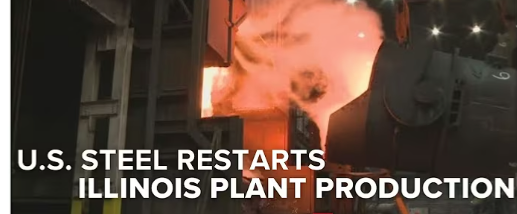
US Steel Granite City Works resume production after 2 years idle
By Bryce S December 31, 2025
U.S. Steel's Granite City Works to open after 3 year closure Founded in 1901 U.S. Steel's Granite City Works is a vital component of the American steel industry, with a rich history that reflects both the resilience and innovation inherent in the sector. Located in Granite City, Illinois , this plant has been a cornerstone of the local economy and a significant contributor to the national steel output. Its roots trace back to the early 20th century, highlighting a legacy of robust manufacturing and skilled labor. Over the years, Granite City Works has adapted to changing market demands and technological advancements, ensuring its position as a key player in steel production. This location advantage has allowed U.S. Steel to maximize its logistical capabilities, ensuring timely delivery and availability of essential materials for various industries, including automotive, construction, and energy. Granite City Works needs to meet increasing domestic steel demand. Steel Slab Production to start again after Nippon Steel sealed a deal with Trump Steel slab production is a crucial stage in the steel manufacturing process, serving as the foundational building block for various steel products. The process begins with raw materials such as iron ore, coal, and limestone, which are transformed into molten iron in a blast furnace. This molten iron is poured into a basic oxygen furnace or electric arc furnace for further refinement, where impurities are removed, and necessary elements are added to achieve desired chemical compositions. The refined molten steel is then poured into a caster, where it solidifies into semi-finished rectangular shapes known as steel slabs. Reasons For Resuming Production at Granite City Works U.S. Steel's decision to resume steel slab production at its Granite City Works is fueled by several key factors. One significant reason is the rising demand for steel products across various industries, including automotive, construction, and manufacturing. The resurgence of these sectors post-pandemic has led to an increased need for raw steel, particularly slabs, which serve as the foundational material for many steel products. Why has Granite City Works been closed? Granite City Works Its proximity to major transportation hubs and industrial centers allows for efficient distribution and reduced transportation costs, making it an economically viable site for production. Read more on Unionization and Why they stopped production in 2023 By ramping up operations at Granite City, U.S. Steel aims to reduce its reliance on foreign imports, enhancing its ability to meet U.S. market demands more swiftly and reliably. This move also aligns with broader national interests in bolstering domestic manufacturing and supporting American jobs. U.S. Steel is likely to invest in modernizing the Granite City facility, incorporating environmentally friendly in the coming years.
By Conan Doyle December 30, 2025
What Is an HTTP Server? An HTTP server handles requests and responses using the Hypertext Transfer Protocol, the foundation of web communication. It listens for client connections, processes incoming data, and sends back content like web pages, images, or files. Popular examples include Apache and Nginx, which together power most websites worldwide. These servers operate at the protocol level, supporting basic methods like GET for retrieving data and POST for sending it, without any strict rules on structure or design. They excel at serving static content or running simple scripts, making them essential for basic web hosting and file delivery. What Makes a Server RESTful? A REST API server builds on HTTP but follows specific architectural principles known as Representational State Transfer. It treats data as resources accessed through uniform URLs, using standard HTTP methods for operations. REST enforces statelessness—each request stands alone, and emphasizes cacheability for efficiency. This style creates predictable, scalable interfaces where clients interact with resources like users or products in a consistent way. Frameworks like Express or NestJS often implement REST patterns, turning plain HTTP capabilities into structured APIs for modern applications. Key Architectural Distinctions The main difference lies in constraints versus freedom. HTTP servers allow any request handling logic, from custom methods to complex session management. REST servers limit themselves to HTTP's built-in features: Nouns in URLs for resources, verbs via methods like GET, POST, PUT, DELETE, and responses with status codes. This uniform interface enables better caching, layering, and client compatibility. While HTTP servers can serve anything over the protocol, REST adds rules that make APIs easier to understand and maintain across teams and tools. How these Methods Are Used Differently REST aligns operations with HTTP methods predictably: GET for safe reads, POST for creation, PUT for full updates, DELETE for removal, and PATCH for partial changes. This convention allows automatic caching of GET requests and idempotent operations that can be repeated safely. Plain HTTP servers might rely heavily on GET and POST only, mixing actions in request bodies or parameters. The REST approach creates clearer contracts between client and server, reducing errors in large systems. REST has become the dominant style for public APIs , powering most web services from social platforms to payment gateways. Developers favor it for interoperability—clients in any language can consume REST endpoints easily. Plain HTTP servers remain common for internal tools, static sites, or custom protocols where full REST constraints add unnecessary overhead. Many modern backends start as HTTP servers and evolve REST layers as they grow. Performance and Scalability Considerations REST's stateless design and caching support horizontal scaling across servers without shared state. Layered systems can add proxies or CDNs transparently. HTTP servers without REST principles can achieve similar raw speed but often require custom solutions for caching and distribution. In practice, the structured approach of REST tends to yield more maintainable performance at scale. When to Choose Each Approach Use a plain HTTP server when serving static content, building simple tools, or needing maximum flexibility without architectural overhead. Opt for a REST API server when creating public interfaces, integrating multiple clients, or planning long-term maintenance in team environments. Hybrid setups are common, many applications expose REST endpoints while using basic HTTP handling internally. The distinction boils down to protocol versus principles: HTTP provides the raw communication channel, while REST adds a disciplined framework on top. Understanding this helps developers build everything from quick prototypes to robust enterprise services effectively.
By Jack Sterling December 22, 2025
In the accelerating domain of artificial intelligence hardware, Google's Tensor Processing Units (TPUs) and NVIDIA's Graphics Processing Units (GPUs) represent two pivotal architectures vying for dominance, particularly when scrutinized through the lenses of efficiency and throughput. The Explosive Growth of AI Chips in 2020's The AI chip market has solidified its role as a foundational pillar of technological progress, fueled by relentless requirements for processing power in machine learning and deep neural architectures. As of late 2025, the industry's trajectory signals robust expansion into 2026, with specialized accelerators such as Google's Tensor Processing Units (TPUs) and NVIDIA's Graphics Processing Units (GPUs) engaged in intense rivalry. These processors facilitate advancements in autonomous vehicles, medical imaging, and predictive analytics, as evidenced by a global market valued around $90-100 billion in 2025 and projected to approach or exceed $120 billion the following year, reflecting broad integration across sectors. What are Alphabet TPUs ? Google Power for Deep Learning Workloads Google's TPUs embody targeted engineering in AI acceleration, purpose-built for tensor operations central to frameworks like TensorFlow. These ASICs shine in efficient matrix computations essential to neural networks, providing strong performance in both training and inference stages. Seamless incorporation into Google Cloud renders TPUs a flexible option for organizations managing vast data volumes. The latest iterations, including the seventh-generation Ironwood, prioritize energy efficiency, doubling performance per watt in some metrics, while delivering elevated throughput for large-scale cloud AI deployments. NVIDIA GPUs | Versatile Engines with Broad Ecosystem Support NVIDIA's GPUs sustain market prominence via adaptability, accommodating AI alongside rendering, simulation, and general high-performance tasks . Designs like Hopper and the succeeding Blackwell feature dedicated tensor cores tailored for AI acceleration, bolstering massive parallel execution. The CUDA ecosystem cultivates an expansive developer base, complemented by comprehensive toolkits that expedite AI implementation. This wide-ranging utility secures NVIDIA's foothold in varied domains, spanning academic research to enterprise-scale operations.
By Jack Sterling December 18, 2025
Order 66 from Mamdani The Billionaires are leaving New York in Perpetration of Zohran's Housing plan to combat Affordability Crisis On December 9, 2025, New York City Mayor-elect Zohran Mamdani convened a closed-door meeting with approximately two dozen real estate executives, including developers, investors, and lenders, to address the city's housing crisis. Zohran Mamdani's Recent Meeting with Real Estate Executives: The gathering, held in Lower Manhattan , focused on strategies to increase affordable housing supply while discussing potential policy measures like rent freezes and delays in new housing approvals. Participants included members from the Partnership for New York City and real estate industry groups, marking an early engagement between the incoming administration and business leaders. Mamdani emphasized collaborative approaches to cut red tape and boost production, though specifics on timelines remained vague. The NY Affordability Crisis Driving Mamdani's Housing Agenda New York City's housing market faces persistent affordability challenges maximum rents at 80 percent AMI. Manhattan rents hit record highs in November 2025, exacerbating the crisis where production is geographically uneven and affordable units comprise only a fraction of new builds. The city completed 27,620 affordable units in 2024 through capital programs, including new construction and preservation, according to the New York Housing Conference's 2025 Tracker Report. Mamdani's plan aims to tackle these disparities by prioritizing equitable distribution across neighborhoods. Billionaires' Responsed Threating Exodus from NYC Amid Mamdani Policy Uncertainty Wealthy New Yorkers have voiced concerns over potential tax increases under Mamdani's administration, with some threatening relocation to lower-tax states. However, data from 2020-2021 indicates the city gained about 10,000 millionaires during similar periods of uncertainty, countering claims of a mass departure. Affluent residents highlight the arduous process of avoiding state and city taxes, including audits and residency requirements, as a deterrent to leaving. While some high-earners relocate to suburbs or other regions to mitigate costs, overall trends show resilience in New York's wealthy population. A Cato Institute commentary from November 2025 notes that even if billionaires stay, their employees might seek more affordable locales. Buy or Sell NYC Real Estate in 2026? Inventory and Mortgage Rate Factors The U.S. housing market in 2026 is expected to see slowly cooling prices with rising inventory, according to Ramsey Solutions' forecast. In New York, home sales dipped 0.7 percent year-over-year, but NYC bucked the trend with increased activity. Experts recommend buying in December 2025 for better deals, as per a Yahoo Finance analysis from December 8. The week of October 12-18, 2025, was highlighted as prime buying time by NAR, with surrounding weeks offering advantages. Manhattan's record rents in November underscore selling opportunities in luxury segments. Mamdani's Housing Plan: Rent Freezes and Production Delays Discussed During the December 9 meeting, Mamdani outlined potential rent freezes and delays in approving new housing, aiming to address affordability gaps where new units exceed AMI thresholds for most New Yorkers. Overall, the market shows resilience, but affordability remains a key concern.

STAY UP TO DATE

GET Objective LATEST