Antonio Brown Apprehended in Dubai: Will Face Attempted Murder Charge in Miami During Adin Ross Stream


Max • November 10, 2025

The dramatic fall of former NFL superstar Antonio Brown took a shocking turn on November 6, 2025, when U.S. Marshals apprehended him in Dubai, extraditing the 37-year-old wide receiver to face attempted murder charges in Miami.


The allegations stem from a chaotic shooting incident outside a celebrity boxing event hosted by streamer Adin Ross on May 17, 2025, where videos captured Brown allegedly firing shots at a man during a brawl. Now held in Essex County, New Jersey, Brown awaits transfer to Miami-Dade County Jail, where he could face up to 15 years...


Antonio Brown Apprehended in Dubai: Details of the Arrest


If convicted of second-degree attempted murder with a firearm this high-profile arrest reignites scrutiny over Brown's post-NFL life.  What is the Adin Ross connection, and what's next for the once-unstoppable athlete?


Miami Police spokesperson Michael Vega confirmed the extradition, praising the "relentless work" of detectives: "This is just another example of the dedication... to identify and arrest those who commit crimes in the City of Miami." lol

Brown, who fled to Dubai shortly after the incident, was flown to New Jersey and booked into Essex County Jail on November 6. No injuries were reported in the May shooting, but the case escalated quickly due to video evidence showing Brown pursuing a man with a black pistol.


The arrest underscores Dubai's role in international law enforcement, despite no formal U.S.-UAE extradition treaty—negotiations relied on diplomatic channels and mutual cooperation. For Brown, whose net worth has plummeted amid bankruptcy filings and unpaid debts, this marks a stark contrast to his days as a seven-time Pro Bowler earning $80 million in the NFL.

Key Timeline: Warrant issued June 11, 2025; Apprehended November 6, 2025; Transfer to Miami pending.

Allegations and Charges of Antonio Brown


The attempted murder charge against Brown arises from a post-event melee at the May 17 amateur boxing match in Miami's Little River neighborhood, streamed live by Adin Ross on Kick. Eyewitness videos, which went viral with millions of views, depict Brown in a fistfight with Zul-Qarnain Kwame Nantambu, escalating when Brown allegedly grabbed a handgun from a security guard's hip and fired two shots at the fleeing man.


Police responded to a ShotSpotter alert around Northeast 2nd Avenue and 67th Street, detaining Brown and others briefly but releasing him that night without charges—until forensic review and witness statements solidified the case. The second-degree felony carries a maximum 15-year sentence and $10,000 fine, per the warrant.

From Super Bowl hero to streamed shooter, Brown's saga exposes fame's dark underbelly—violence, evasion, and accountability in the social media age. As #AntonioBrownArrest trends, it prompts questions: Is this rock bottom, or just another chapter?

By Jack Sterling December 22, 2025
In the accelerating domain of artificial intelligence hardware, Google's Tensor Processing Units (TPUs) and NVIDIA's Graphics Processing Units (GPUs) represent two pivotal architectures vying for dominance, particularly when scrutinized through the lenses of efficiency and throughput. The Explosive Growth of AI Chips in 2020's The AI chip market has solidified its role as a foundational pillar of technological progress, fueled by relentless requirements for processing power in machine learning and deep neural architectures. As of late 2025, the industry's trajectory signals robust expansion into 2026, with specialized accelerators such as Google's Tensor Processing Units (TPUs) and NVIDIA's Graphics Processing Units (GPUs) engaged in intense rivalry. These processors facilitate advancements in autonomous vehicles, medical imaging, and predictive analytics, as evidenced by a global market valued around $90-100 billion in 2025 and projected to approach or exceed $120 billion the following year, reflecting broad integration across sectors. What are Alphabet TPUs ? Google Power for Deep Learning Workloads Google's TPUs embody targeted engineering in AI acceleration, purpose-built for tensor operations central to frameworks like TensorFlow. These ASICs shine in efficient matrix computations essential to neural networks, providing strong performance in both training and inference stages. Seamless incorporation into Google Cloud renders TPUs a flexible option for organizations managing vast data volumes. The latest iterations, including the seventh-generation Ironwood, prioritize energy efficiency, doubling performance per watt in some metrics, while delivering elevated throughput for large-scale cloud AI deployments. NVIDIA GPUs | Versatile Engines with Broad Ecosystem Support NVIDIA's GPUs sustain market prominence via adaptability, accommodating AI alongside rendering, simulation, and general high-performance tasks . Designs like Hopper and the succeeding Blackwell feature dedicated tensor cores tailored for AI acceleration, bolstering massive parallel execution. The CUDA ecosystem cultivates an expansive developer base, complemented by comprehensive toolkits that expedite AI implementation. This wide-ranging utility secures NVIDIA's foothold in varied domains, spanning academic research to enterprise-scale operations.
By Jack Sterling December 18, 2025
Order 66 from Mamdani The Billionaires are leaving New York in Perpetration of Zohran's Housing plan to combat Affordability Crisis On December 9, 2025, New York City Mayor-elect Zohran Mamdani convened a closed-door meeting with approximately two dozen real estate executives, including developers, investors, and lenders, to address the city's housing crisis. Zohran Mamdani's Recent Meeting with Real Estate Executives: The gathering, held in Lower Manhattan , focused on strategies to increase affordable housing supply while discussing potential policy measures like rent freezes and delays in new housing approvals. Participants included members from the Partnership for New York City and real estate industry groups, marking an early engagement between the incoming administration and business leaders. Mamdani emphasized collaborative approaches to cut red tape and boost production, though specifics on timelines remained vague. The NY Affordability Crisis Driving Mamdani's Housing Agenda New York City's housing market faces persistent affordability challenges maximum rents at 80 percent AMI. Manhattan rents hit record highs in November 2025, exacerbating the crisis where production is geographically uneven and affordable units comprise only a fraction of new builds. The city completed 27,620 affordable units in 2024 through capital programs, including new construction and preservation, according to the New York Housing Conference's 2025 Tracker Report. Mamdani's plan aims to tackle these disparities by prioritizing equitable distribution across neighborhoods. Billionaires' Responsed Threating Exodus from NYC Amid Mamdani Policy Uncertainty Wealthy New Yorkers have voiced concerns over potential tax increases under Mamdani's administration, with some threatening relocation to lower-tax states. However, data from 2020-2021 indicates the city gained about 10,000 millionaires during similar periods of uncertainty, countering claims of a mass departure. Affluent residents highlight the arduous process of avoiding state and city taxes, including audits and residency requirements, as a deterrent to leaving. While some high-earners relocate to suburbs or other regions to mitigate costs, overall trends show resilience in New York's wealthy population. A Cato Institute commentary from November 2025 notes that even if billionaires stay, their employees might seek more affordable locales. Buy or Sell NYC Real Estate in 2026? Inventory and Mortgage Rate Factors The U.S. housing market in 2026 is expected to see slowly cooling prices with rising inventory, according to Ramsey Solutions' forecast. In New York, home sales dipped 0.7 percent year-over-year, but NYC bucked the trend with increased activity. Experts recommend buying in December 2025 for better deals, as per a Yahoo Finance analysis from December 8. The week of October 12-18, 2025, was highlighted as prime buying time by NAR, with surrounding weeks offering advantages. Manhattan's record rents in November underscore selling opportunities in luxury segments. Mamdani's Housing Plan: Rent Freezes and Production Delays Discussed During the December 9 meeting, Mamdani outlined potential rent freezes and delays in approving new housing, aiming to address affordability gaps where new units exceed AMI thresholds for most New Yorkers. Overall, the market shows resilience, but affordability remains a key concern.
By Alfanso C. December 18, 2025
The Prediction: A 2026 Crash Kiyosaki Says Has Already Begun Robert Kiyosaki, author of the 1997 bestseller Rich Dad Poor Dad with over 40 million copies sold worldwide, issued a stark warning in late November 2025: The "biggest crash in history" is underway, starting in the U.S. and rippling to Europe and Asia. Drawing from his 2003 book Rich Dad's Prophecy, which foresaw a market downturn tied to debt cycles, Kiyosaki points to AI-driven job losses. Kiyosaki's track record on forecasts varies: A 2022 review of his calls since then showed about 10 percent accuracy, per Finbold analysis, but his emphasis on tangible assets has resonated amid 2025's $1.2 trillion crypto market dip. He urges shifting from stocks and fiat, citing Gresham's Law—bad money drives out good—as rationale for hard assets. Kiyosaki's Preferred Crash Survivor Silver & claims Recession Odds Economists peg U.S. recession probability at 40 percent by end-2025 into 2026, per J.P. Morgan's November 2025 outlook, down from 65 percent in 2022 but up from 26 percent at 2024's close. Barclays called it "50-50" in September 2025, citing trade tensions and slowing job growth, nonfarm payrolls added just 12,000 in October, per BLS. JPMorgan CEO Jamie Dimon echoed in October: A downturn "could hit in 2026," amid 3.25-3.5 percent Fed funds rate forecasts by Q2 2026. Polymarket odds show 31 percent chance of recession through August 2026, based on NBER announcements or two negative GDP quarters. RSM US predicts 2.2 percent GDP growth in 2026 but flags stagflation risks, with inflation "uncomfortably hot" at 3 percent. Morgan Stanley sees global GDP at 3.2 percent in 2026, but U.S. slowdowns could ripple, per their December outlook. Why Silver Shines as a Hedge according to Kiyosaki Silver's 60 percent industrial use, solar cells (80-100 mg each), EVs, and electronics, fuels demand amid 2025's 215 million ounce deficit, per Silver Institute. As a precious metal, it correlates inversely with stocks (gold-silver ratio at 80:1 in November 2025, historical crash average 60:1), per deVere Group analysis. In downturns, silver falls less than the S&P 500, gaining 71.9 percent YTD 2025 despite volatility. Kiyosaki's $200 call exceeds consensus $50-100 range but aligns with structural deficits: Supply grows 2,500-3,500 metric tons yearly, per CoinCodex, while demand surges from AI and renewables. Physical shortages spiked lease rates in 2025, echoing 2020's 50 percent rally. In Kiyosaki's worldview , silver's industrial-monetary duality.
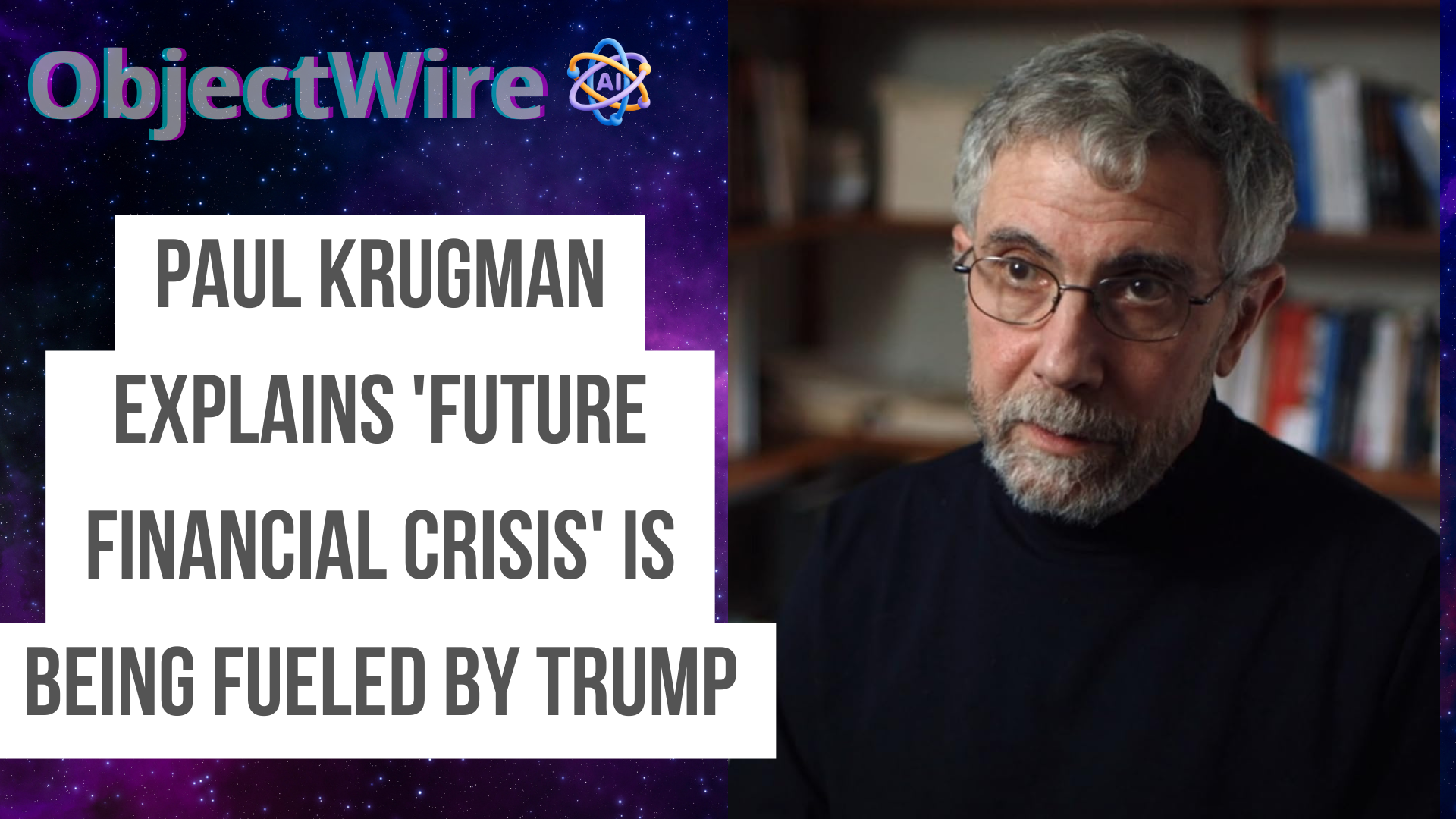
Paul Krugman Explains 'Future Financial Crisis' is fueled by trump
By Jack Sterling December 18, 2025
Paul Krugman’S Economic Perspective Paul Krugman is a renowned economist whose insights have shaped understanding in both academic and public spheres. His work, known for its clarity and incisive analysis, often bridges complex economic theories with real-world applications, making his contributions essential in discussions of fiscal policy and global economics. Krugman, a Nobel laureate , has dedicated much of his career to examining the intricacies of economic structures and their impact on societies. Krugman's perspective is grounded in the belief that informed economic policy can prevent crises and promote equitable growth. His analysis of current policies often underscores the dangers posed by deregulation, protectionism, and unsustainable debt expansion. Paul Krugman, a Nobel laureate in economics, has been vocal about his concerns regarding the economic policies implemented during Donald Trump's presidency Particularly in terms of their potential to sow the seeds of a future financial crisis. Krugman argues that Trump's approach was characterized by a significant reduction in regulatory oversight, particularly in the financial sector, coupled with substantial tax cuts for corporations and the wealthiest individuals. These measures, he suggests, may have provided short-term economic boosts but at the cost of long-term stability. Krugman points to the 2017 Tax Cuts and Jobs Act as a pivotal policy that exacerbated income inequality and ballooned the federal deficit. By favoring the wealthy, these tax cuts did little to stimulate sustainable economic growth, instead enriching those at the top and leaving the middle and lower classes with marginal benefits. Furthermore, Trump's deregulation efforts, particularly in the banking industry, echo the pre-2008 era's deregulatory environment that contributed to the financial collapse. Krugman's analysis warns of a scenario resembling past financial downturns. The Connection Between Tax Cuts And National Debt Paul Krugman, a renowned economist, has often explained how significant tax cuts can substantially increase the national debt, potentially setting the stage for a future financial crisis. The tax cuts implemented during Donald Trump's presidency are a prime example of this dynamic. These cuts primarily benefited corporations and the wealthy, leading to a shortfall in government revenue while failing to generate the promised economic growth. The idea behind such tax reductions is often rooted in supply-side economics, suggesting that lowering taxes will spur investment, create jobs, and ultimately increase government revenues through heightened economic activity. However, the anticipated growth frequently falls short of these predictions. Krugman’S Predictions For A Future Financial Crisis These cuts, according to Krugman, have led to an increase in the federal deficit without substantially boosting long-term economic growth. This rising debt could constrain future government spending, especially in times of economic downturn when stimulus is most needed. He also points to the escalating trade tensions initiated by Trump's trade wars, which have disrupted global supply chains and could undermine international economic cooperation. Such tensions might lead to retaliatory measures and uncertainties that could further destabilize global markets. Krugman's analysis underscores the interconnected nature of these policies and the potential for them to trigger a crisis that could have far-reaching implications for both domestic and global economies.
By Jack Sterling December 9, 2025
Meta's Ai GPU Needs Meta Platforms, formerly known as Facebook, has been constantly pushing the boundaries of technology to enhance user experiences across its suite of applications, including Facebook, Instagram, WhatsApp, and Oculus. A critical aspect of this innovation is the deployment of artificial intelligence, which drives everything from content moderation to personalized user experiences. AI's role within Meta has grown exponentially, as it powers complex algorithms that handle massive amounts of data to make real-time decisions. With billions of users interacting daily, the demand for efficient, high-performance AI infrastructure is paramount. To meet these needs, Meta has traditionally relied on NVIDIA's GPUs, known for their robust performance in handling AI workloads. However, the rapid advancements in AI have necessitated even more specialized hardware solutions. These solutions must offer swift processing capabilities, scalability, and energy efficiency to support Meta's expansive AI operations across its platforms.  As AI models become more sophisticated, requiring extensive computation for deep learning and natural language processing, the need for cutting-edge infrastructure grows. This is where custom compute chips come into play. In this quest for superior AI infrastructure, Meta has been exploring alternative options that promise to deliver enhanced performance tailored to their unique AI requirements. A potential shift towards custom chips from Google's parent company, offering Tensor Processing Units (TPUs), represents a strategic consideration for future-proofing their AI capabilities. Current Meta Partnership With Nvidia Meta Platforms has maintained a crucial partnership with Nvidia, a leading figure in the field of graphics processing and AI computing. This collaboration primarily centers around Nvidia's powerful GPUs, which have become the backbone for running sophisticated AI models and supporting Meta’s expansive infrastructure needs. These GPUs have been instrumental in training large-scale machine learning algorithms, enhancing Meta's capabilities in areas such as content recommendation, computer vision, and natural language processing. The reliance on Nvidia has enabled Meta to rapidly advance its AI initiatives, thereby improving user experiences across its platforms, including Facebook, Instagram, and WhatsApp. Nvidia's cutting-edge technology has provided Meta with the necessary computational power to manage and process massive amounts of data efficiently. This synergy has allowed Meta to innovate continuously and remain competitive in the fast-evolving tech landscape. The GPUs offer flexibility and scalability, crucial for a company that deals with billions of user interactions daily. Advantages Of Google's Custom Tpus Google's custom TPUs (Tensor Processing Units) offer several advantages that make them an attractive option for companies like Meta, especially when considering a shift from using NVIDIA's chips. One of the primary benefits of Google's TPUs is their optimization for artificial intelligence workloads, particularly in deep learning. These chips are designed specifically to handle the heavy computational tasks required for training AI models, resulting in faster processing times and increased efficiency compared to general-purpose GPUs. Another advantage is the scalability that TPUs provide. Google's infrastructure allows organizations to scale their AI workloads seamlessly, making it easier to manage the growing demands of AI development and deployment. This scalability is essential for tech giants like Meta, which continuously expand their AI-driven services. Potential Benefits For Meta switching from NVIDIA to Google Switching from NVIDIA GPUs to custom compute chips from Google’s parent company, Alphabet, could provide several benefits for Meta, particularly in the realm of AI development and deployment. One of the primary advantages is cost efficiency. Utilizing custom tensor processing units (TPUs) could significantly reduce the expenses associated with large-scale AI operations. These chips are specifically optimized for AI tasks, offering better performance-per-dollar compared to generalized GPUs. This means Meta could achieve more with less financial outlay, potentially freeing up resources for other innovative projects. Beyond cost, the integration of Alphabet's TPUs could enhance processing speed and efficiency. These chips are designed to handle the specific computations needed for AI models more effectively, which could lead to faster training times and improved performance of AI-driven features. This capability is crucial as Meta continues to invest heavily in virtual reality, augmented reality, and other AI-powered technologies. Additionally, partnering with Alphabet might facilitate better integration and collaboration opportunities. Given the expertise and infrastructure that Google has developed around its TPUs, Meta could leverage this to speed up the development and deployment of new AI applications. This strategic shift could ultimately strengthen Meta's competitive edge in the tech industry, enabling it to innovate more rapidly and effectively. Challenges And Considerations Switching from NVIDIA to Google’s custom Tensor Processing Units (TPUs) presents several challenges and considerations for Meta Platforms. One significant challenge is the compatibility and integration of TPUs with Meta's existing infrastructure. Transitioning to a new hardware architecture requires extensive modifications to software, potentially disrupting ongoing projects and necessitating considerable developer resources. Additionally, TPUs might require different frameworks or APIs, demanding retraining of staff and adaptation of current AI models to maximize efficiency. Though Google’s TPUs might offer cost advantages, the initial investment in new hardware, training, and possible downtime during transition can be substantial. Meta must conduct thorough cost-benefit analyses to ensure the financial viability of such a switch. Another consideration is vendor dependency. Relying on Google for critical hardware components might limit Meta’s flexibility and bargaining power, particularly if their relationship with Google changes over time.
By Conan Doyle December 9, 2025
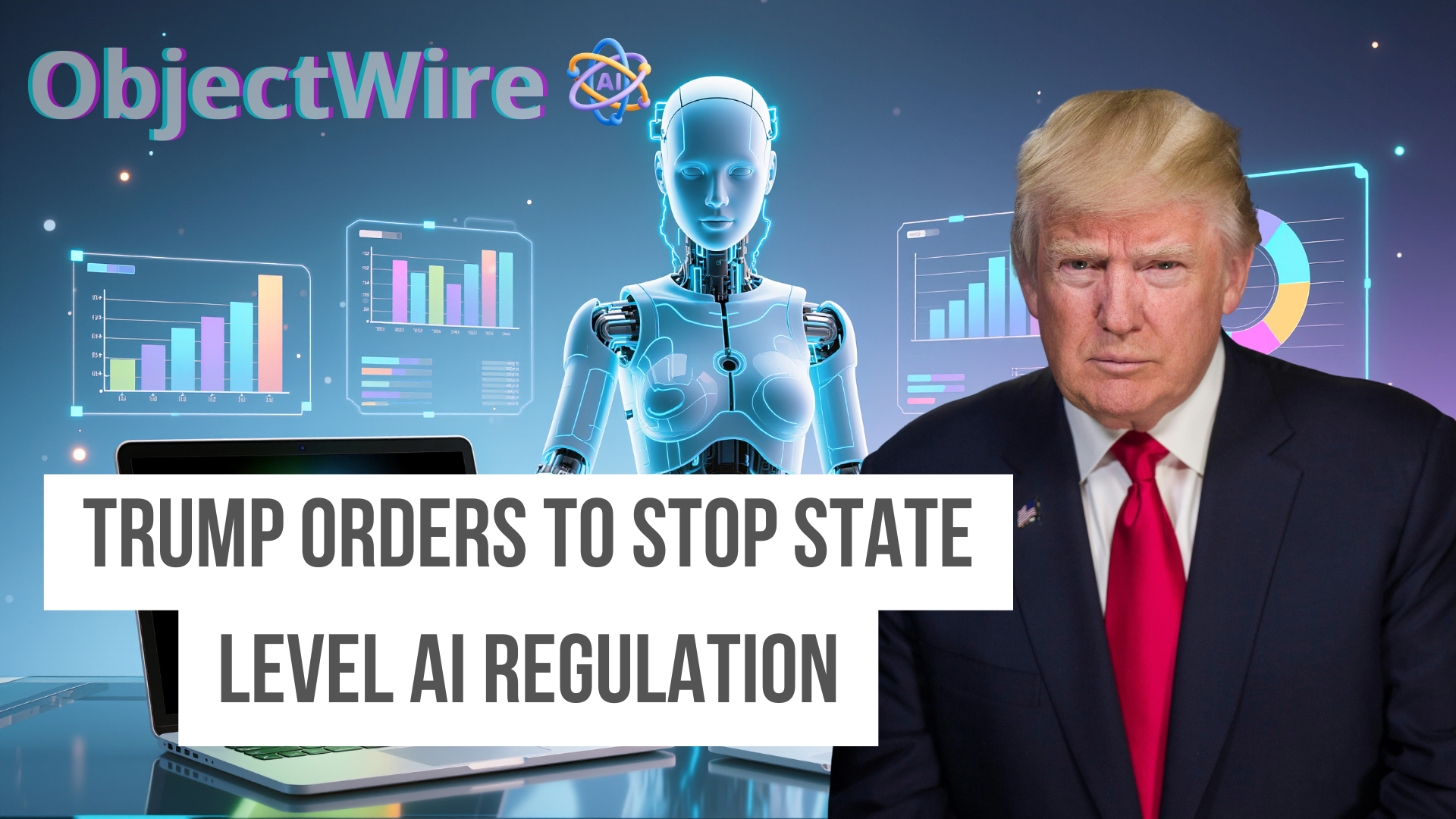
Federal Push to Halt State AI Regulations As artificial intelligence reshapes industries from healthcare to hiring, states have accelerated regulatory efforts in recent months, introducing bills that mandate transparency, risk assessments, and consumer protections. A draft federal executive order, leaked on November 19, 2025, signals a direct challenge to these initiatives, directing agencies to identify and litigate against state laws deemed burdensome. This move, paused as of November 21 , reflects ongoing tensions in a landscape where 45 states considered AI-related legislation in 2025, per the National Conference of State Legislatures (NCSL) tracker. With federal guidance fragmented, lacking comprehensive national rules—states fill the void, but the proposed order could preempt them through lawsuits and funding threats, reshaping compliance for the $200 billion U.S. AI market projected for 2026. States Leading the Charge: Recent Bills and Their Aims In October and November 2025, state lawmakers advanced measures targeting AI's societal risks, focusing on bias mitigation, deepfake disclosures, and algorithmic accountability. California's Senate Bill 53, progressing through committee on October 15, requires high-risk AI systems in employment and lending to undergo annual audits for discrimination, with fines up to $10,000 per violation. New York's RAISE Act, reintroduced October 22, compels developers of generative AI models to publish safety protocols and report incidents causing harm, aiming to curb misuse in elections and media. Illinois's House Bill 5461, cleared October 28, mandates watermarking for AI-generated content to combat deepfakes, building on its 2023 biometric privacy law that has yielded $1.2 billion in settlements since 2015. These bills emphasize developer responsibility: Audits must document bias testing, with public reports due annually, potentially affecting 60 percent of U.S. AI deployments in regulated sectors like finance and healthcare. New York's RAISE Act: Disclosure Mandates Under Fire New York's RAISE Act exemplifies state-level scrutiny, requiring large AI firms to disclose training data sources and risk mitigation steps for models over 1 billion parameters. Introduced October 22, 2025, it faced immediate pushback, with a super PAC linked to tech interests spending $500,000 on ads by November 10 opposing its "innovation-killing" clauses. Proponents cite a 2025 Brookings Institution study showing undisclosed AI biases cost U.S. businesses $100 billion yearly in errors, from hiring disparities to faulty loan approvals. The bill's mechanism: Mandatory incident reporting within 72 hours for harms exceeding $50,000, with AG enforcement powers including civil penalties up to $5,000 per violation. As of November 24, it awaits assembly review, amid 15 similar disclosure bills in other states. Broader State Efforts: Moratoriums, Audits, and Deepfake Bans Beyond disclosures, states target specific harms. Colorado's AI Act, effective February 2026 but under federal scrutiny since October 30, requires impact assessments for high-risk AI in 15 sectors, with 2025 pilot audits uncovering 28 percent bias rates in public tools. Texas's Senate Bill 20, advanced November 5, bans deepfakes in elections 30 days prior to voting, with $1,000 fines per offense, addressing a 2025 rise in 200+ AI-generated attack ads nationwide. A November 17 House defense bill provision proposed a 10-year moratorium on state AI enforcement, but the Senate struck it on November 20 with near-unanimous support (98-2 vote), preserving state authority. Overall, 9.5 percent of 2025 AI bills passed, per Future of Privacy Forum data, focusing on audits (40 percent) and disclosures (35 percent). Federal Leverage AI laws' constitutionality, prioritizing those "burdening interstate commerce." This means developers face dual compliance: State audits now, potential federal overrides later. A 2025 IAPP survey shows 62 percent of firms already budgeting 15 percent more for multi-jurisdictional reviews. States' focus on audits and disclosures could slow AI deployment by 20 percent in regulated sectors, per McKinsey 2025 estimates, but also foster trust—65 percent of consumers favor such transparency, per Pew November polls. The federal pause buys time, but 40 states eyeing 2026 sessions signal escalation; Colorado's law alone prompted 25 compliance filings in Q4 2025.
By Jack Sterling December 9, 2025
Proof of Engagement vs. Proof of Authority: Blockchain Consensus Explained Simply Blockchain consensus mechanisms are the rules that decide how a network agrees on new transactions and blocks. Think of it as a group vote in a decentralized club: Everyone needs to agree the ledger is truthful, or chaos ensues. Bitcoin pioneered Proof of Work in 2009 , but energy concerns—Bitcoin consumes 150 TWh yearly, per Cambridge 2025 estimates, sparked alternatives. Today, 70 percent of blockchains use non-PoW models, per CoinGecko data. Two emerging contenders: Proof of Engagement (PoE) and Proof of Authority (PoA), each solving different problems in speed, trust, and user involvement. Proof of Authority (PoA): Trusted Guardians Run the Show Proof of Authority relies on pre-approved validators—known entities with reputation at stake—rather than anonymous miners. Introduced in 2017 by Ethereum co-founder Gavin Wood for Parity, PoA networks select 10-100 validators based on identity and track record. Validators stake their reputation: Misbehave, and the network blacklists them publicly. In simple terms: Imagine a private club where only vetted members (banks, corporations) can approve entries at the door. No energy-wasting puzzles—just trusted sign-offs. VeChain, a PoA leader with $2.5 billion market cap in 2025, uses 101 Authority Masternodes run by enterprises like PwC and DNV, processing 10,000+ transactions per second (TPS) at sub-cent costs. Energy footprint: Near zero compared to Proof of Work's 0.5 percent global electricity use.
By Max December 2, 2025
YouTube TV plans lower-cost sports bundles and ESPN Unlimited integration by end-2026, per Disney deal. Base plan at $83/month gains full ESPN access (no extra fee), amid 8M+ subscribers and 15% price hikes since 2020. Explore timelines, features, and market shifts.
Elon Musk wants to Shade the Sun With AI Satellites
By Bryce S November 29, 2025
concept: Solar Shading: Exploring Geoengineering's Reflective Strategies Defining Solar Shading in Climate Context Solar shading, a subset of solar geoengineering, seeks to reflect sunlight back into space to cool global temperatures. Techniques range from stratospheric aerosol injection—mimicking volcanic cooling effects that reduced global temperatures by 0.5 degrees for 1-2 years after Mount Pinatubo's 1991 eruption—to space-based reflectors. Elon Musk's Recent Proposals| AI-Driven Satellites For solar Shading In November 2025, discussions around AI-equipped satellites for sunlight management gained traction, with proposals for constellations of solar-powered units capable of dynamic shading. A fleet of 100 gigawatts worth of such satellites could theoretically adjust Earth's energy balance, as outlined in concepts shared on social platforms that month. These systems would use AI for real-time orientation, potentially reducing incoming solar radiation by 1-2 percent—enough to stabilize temperatures, per Carnegie Endowment analyses from July 2025. SpaceX's Starlink network, with over 6,000 satellites deployed by mid-2025, provides a blueprint for scalability, though adapting for reflectivity would require new materials engineering. The Science of Sun-Shading: From Volcanoes to Orbits Solar geoengineering draws from natural precedents, like volcanic eruptions releasing sulfur dioxide that reflects 10-20 percent more sunlight temporarily. Satellite-based methods position reflectors at Lagrange points for stable shading, potentially cooling the planet by 1 degree and saving 400,000 lives annually from heat-related causes, as modeled in a Georgia Tech study from December 2024. Identifying Risks of Sun Shading Critics point to uncertainties: Altering radiation could shift rainfall by 5-10 percent, impacting agriculture in regions like sub-Saharan Africa, per a 2025 Phys.org article. Geopolitical risks loom, with potential for conflicts over deployment, as warned in a CEPA analysis from November 2025 .
By Jack Sterling November 26, 2025
Stev Kicked Off Logan Paul's Podcast: Making An Official Return To YouTube A Dramatic Exit and a Long-Awaited Comeback In the fast-paced world of online influencers, where one viral clip can eclipse a thousand scripted ones, Stephen Deleonardis—SteveWillDoIt—recently turned heads with a podcast walkout that felt straight out of a reality TV script. On November 25, 2025, during episode 483 of Logan Paul's Impaulsive podcast, the NELK Boys co-founder abruptly exited less than 40 minutes in, citing frustrations that escalated into a heated confrontation. This incident, which garnered over 2 million views on YouTube within 24 hours and sparked more than 50,000 tiktok posts under related hashtags, unfolded just as Steve hyped his YouTube return after a three-year ban. So how much much money did SteveWillDoIt Really give away compared to mr beast As of November 2025, SteveWillDoIt has given away approximately $2.1–2.5 million across his entire career (2018–present), according to cross-referenced estimates from NetWorthSpot, SocialBlade video audits, and his own on-stream tallies. The bulk includes roughly $1.2 million in cash and luxury items from 2019–2021 (Lamborghinis, Rolexes, six-figure fan drops), another $600,000 during his 2022–2025 Kick era (weekly viewer giveaways averaging $50K–$100K per major stream), and a recent $20,000 Compton cash drop plus the upcoming $1 million subscriber-milestone pledge that could push him past $3 million by early 2026. His net worth sits around $5–6 million, meaning giveaways represent roughly 35–40 % of everything he’s ever earned. MrBeast, by contrast, has distributed $92.5 million+ in direct cash and goods since 2018, per GiveawayListing’s exhaustive audit and Beast Philanthropy’s public filings. That figure excludes indirect impact like the 42 million meals (valued at ~$300 million) or the $65 million+ raised through Team Trees/Team Seas. In 2025 alone he’s already cleared $45 million between the $5 million Beast Games prize pool, a $40 million water-well campaign, and a single 15-hour charity stream that netted $12 million. From Fan Backlash to Influencer Firestorms Steve Will Do It and Logan Paul represent two sides of the YouTube coin: one a stunt-driven provocateur, the other a polished entertainer turned WWE star. Steve, born in 1999, rose through NELK Boys pranks and giveaways, peaking with videos like his 2021 "Destroying $100,000 of Weed" that racked up 15 million views. Logan, with 23.6 million subscribers as of November 2025, built his empire from Vine skits to boxing bouts, including a 2018 controversy over a Tokyo forest video that cost him 500,000 subscribers overnight but later rebounded with 2.5 million gained in 2024 alone. Their intersections date back to 2019 collaborations, such as joint streams drawing 1.8 million concurrent viewers on Twitch proxies, blending Steve's chaos with Logan's charisma. Data from HypeAuditor shows their combined audience reaches 28 million unique users, with 42% overlap in 18-24-year-old demographics. Yet, tensions simmered: Steve's 2022 YouTube ban stemmed from "severe violations" tied to gambling ads, a policy enforced on 1,200 channels that year, per YouTube's transparency report. Logan, meanwhile, navigated his own bans, returning stronger—his Impaulsive podcast alone logs 150 million monthly downloads across platforms. This backdrop of mutual reinvention set the stage for their latest clash, where old alliances met fresh ambitions. A Podcast Meltdown Over MrBeast and Boundaries What started as a promotional chat for Steve's December 24, 2025, YouTube relaunch devolved into a 44-minute episode that Impaulsive hosts Logan Paul and Mike Majlak later described as "unnecessarily chaotic." At the 30-minute mark, Steve accused MrBeast ( Jimmy Donaldson ) of being "fake" and "ghosting" him during his ban, claiming the philanthropist, whose channel boasts 320 million subscribers and $854 million in 2024 earnings, offered no help despite prior outreach. Logan defended MrBeast, noting Steve's ban resulted from self-promoted gambling links, a violation affecting 15% of flagged creator content in 2022 per YouTube stats. Tensions peaked when Steve used a racial slur three times—bleeped in the edit—and interrupted repeatedly, prompting Logan to say, "You've reached a line... chill a little bit," before escorting him out. Post-exit, Logan remarked, "If we weren’t on this podcast, I would’ve slapped him," a clip viewed 3.2 million times on X. Majlak later revealed editing out 20 minutes where Steve "drank heavily," protecting the guest amid what he called "nonsensical" rants. Steve Will Do It's Surprise Return to YouTube Banned since August 1, 2022, for "severe violations" involving gambling promotions, a policy that zapped 2,300 channels that year, Steve's reinstatement by January 1, 2026, with the "Convict Kitchen" series.

STAY UP TO DATE

GET Objective LATEST